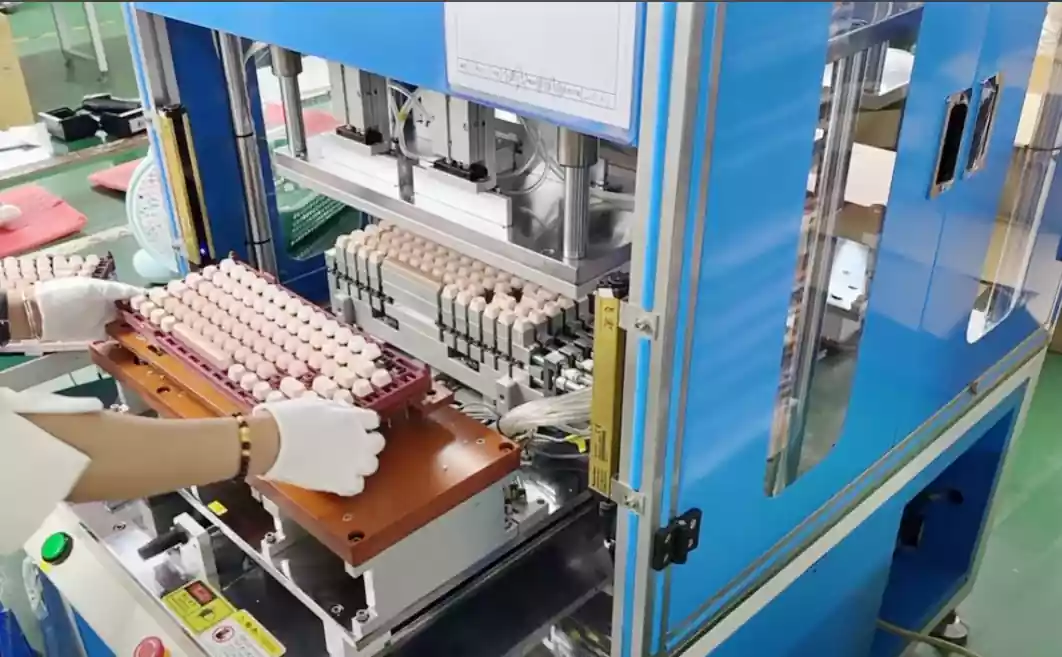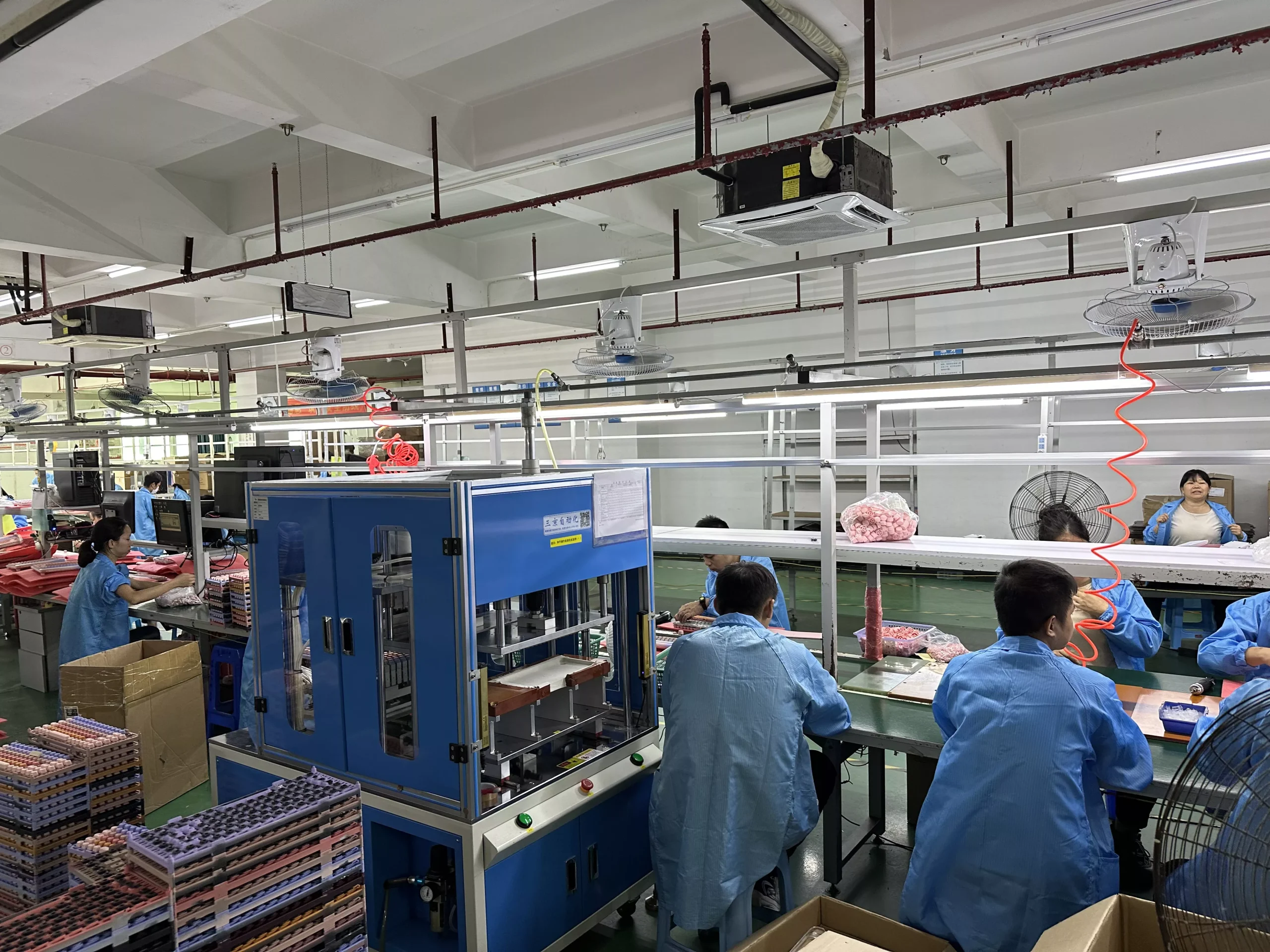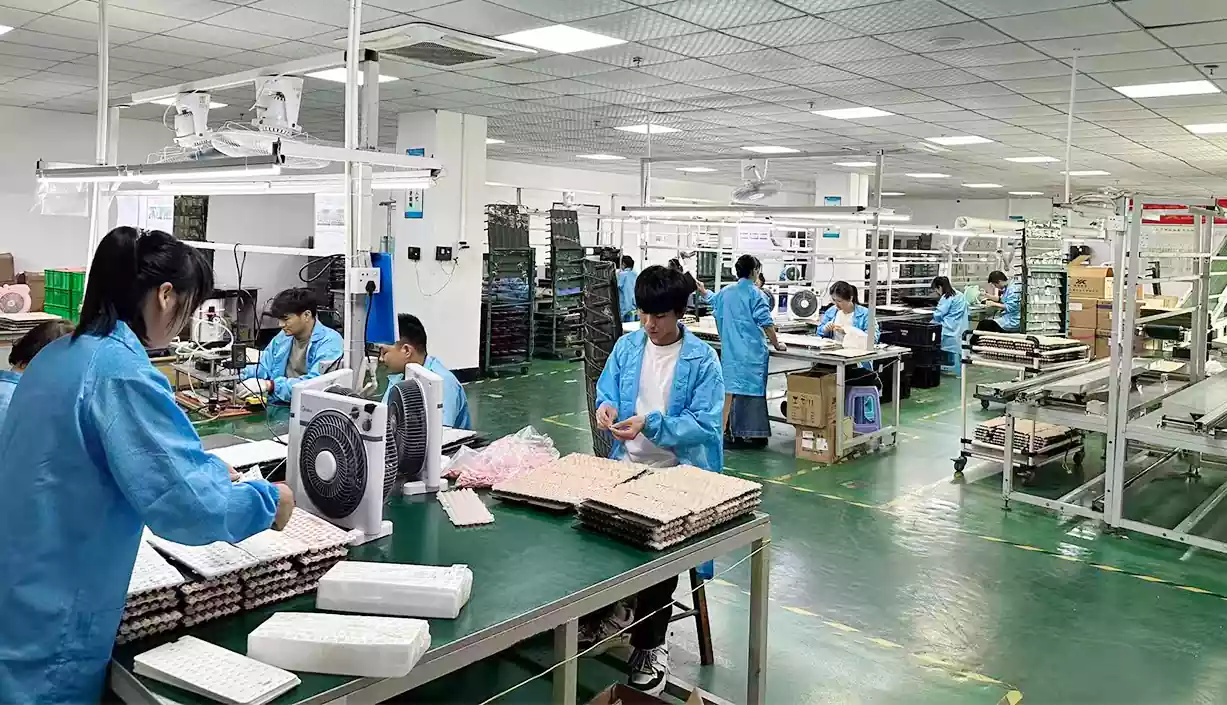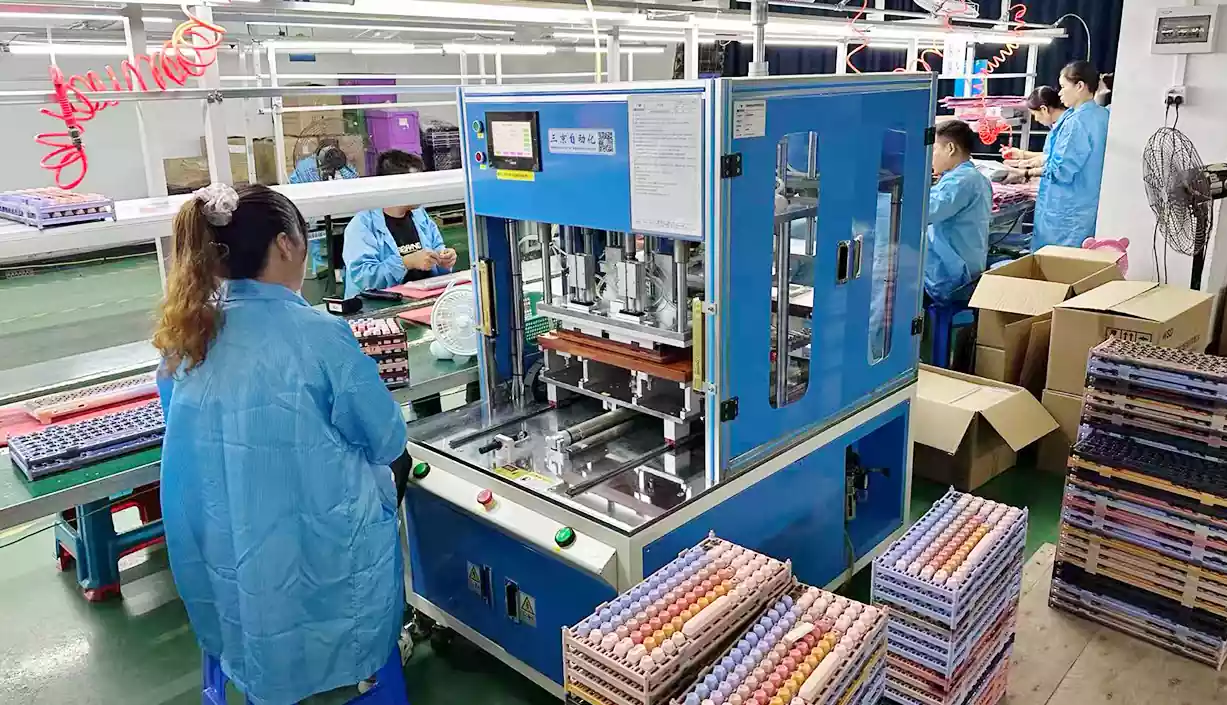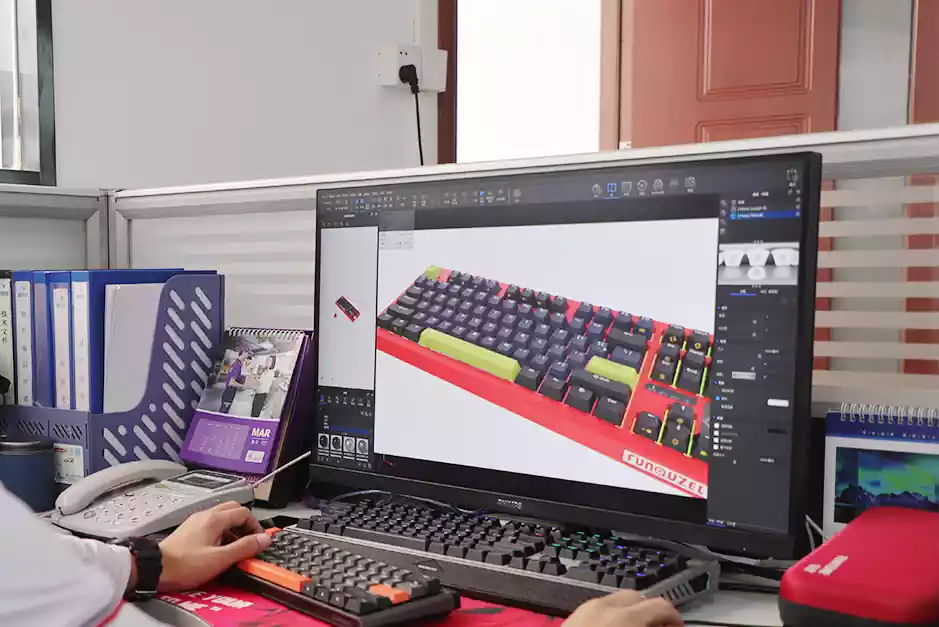
In the workshop of Hengcang Electronic Technology, silicone pad printing heads transfer customer LOGOs from steel plates to keyboard surfaces with micron-level precision. Each piece of equipment completes LOGO printing for over 5,000 keyboards daily.
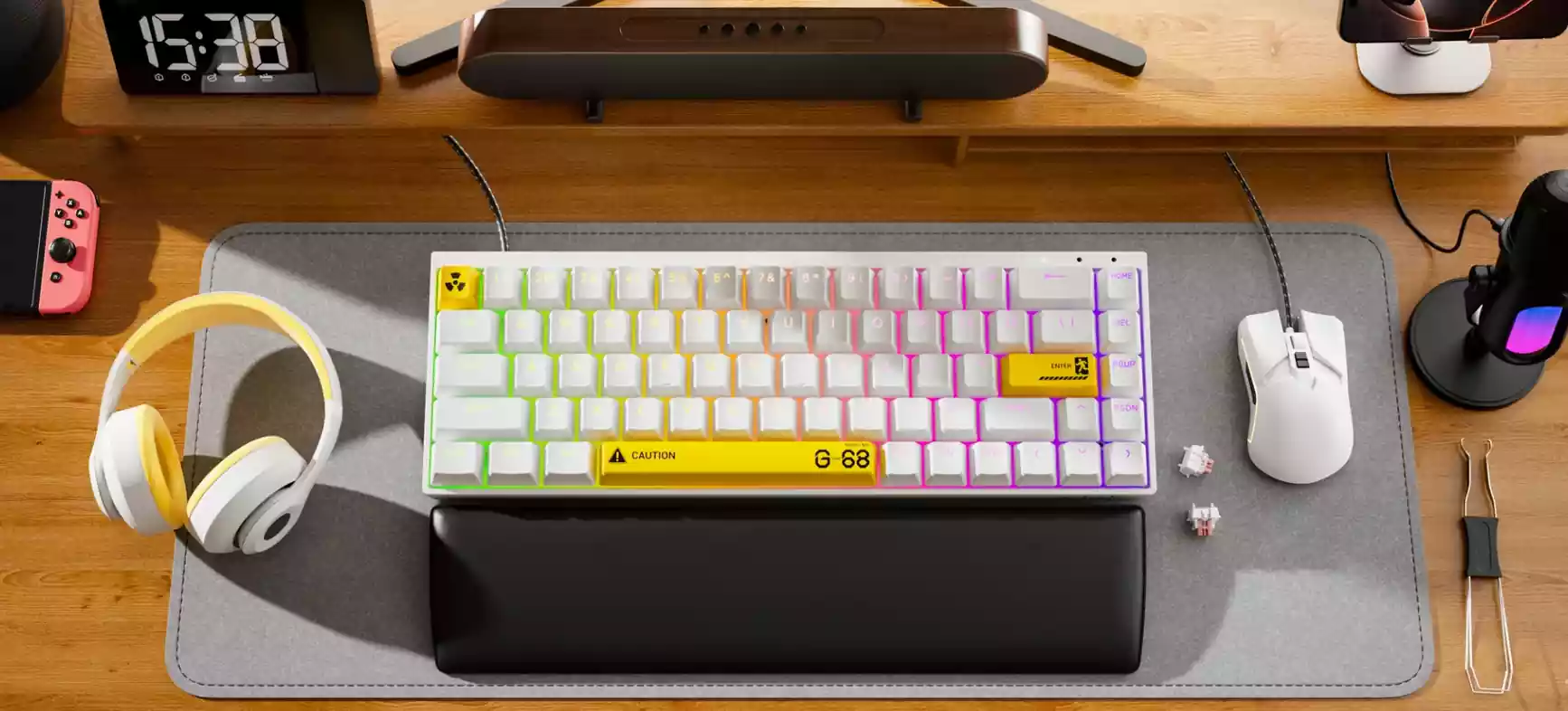
A brand LOGO on a keyboard is not just a product identifier, but also a key carrier of brand image. The pad printing process adopted by Hengcang Electronic Technology enables clear, durable LOGO printing on keyboard surfaces of various shapes, controlling the defect rate to below 0.1%.
Derived from screen printing, this special printing method achieves precise printing on irregular surfaces through a unique silicone transfer pad. This article comprehensively analyzes the entire process of customer LOGO pad printing at Hengcang Electronic Technology—from preparation to quality control—taking you deep into this precision craft.
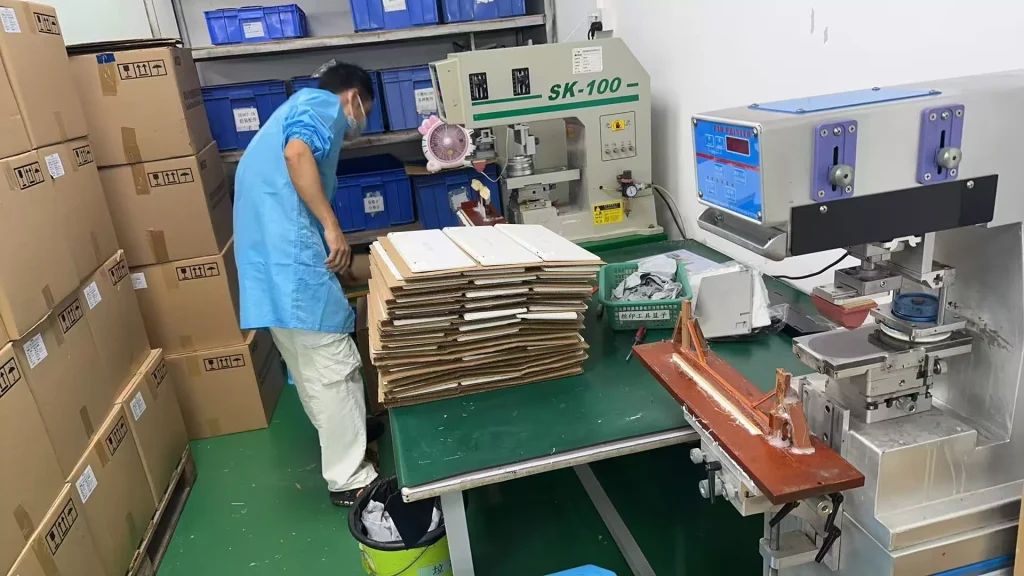
01 Pad Printing Principle & Equipment Composition
The basic principle of pad printing is similar to a daily rubber stamp: it is an indirect gravure printing technology. Its core process involves first etching the customer’s LOGO onto a steel plate to form a gravure, then transferring ink from the steel plate to the keyboard surface via a silicone pad.
The pad printing equipment used by Hengcang Electronic Technology mainly includes five key systems:
- Steel Plate Fixing Device: Secures the steel plate engraved with the LOGO.
- Ink Supply System: Ensures uniform ink supply.
- Silicone Pad Printing Head: Responsible for ink transfer.
- Positioning Fixture: Guarantees precise keyboard positioning.
- Control System: Coordinates the operation of all components.
The silicone pad printing head is the most distinctive part of the process. Made of elastic silicone material, it can deform freely according to the shape of the keyboard surface. Hengcang Electronic Technology selects silicone pads of different shapes and hardness based on the curvature of different keyboard surfaces, ensuring the completeness and clarity of LOGO transfer.
Compared with screen printing, the greatest advantage of pad printing technology is its ability to perfectly print text and patterns on irregular or special-shaped objects. This makes it particularly suitable for LOGO printing on keyboard surfaces, which often have slight curvatures.
02 Pre-Printing Preparation
Steel plate preparation is the first step in LOGO pad printing. Based on the LOGO files provided by customers, Hengcang Electronic Technology uses laser engraving or etching technology to create gravure patterns on steel plates. The quality of the steel plate directly determines printing precision, so strict requirements are imposed on etching depth (typically 0.015mm to 0.035mm) and surface smoothness.
Ink selection depends on the keyboard material and customer requirements. Pad printing ink needs appropriate viscosity and drying properties. Hengcang Electronic Technology uses specialized inks to ensure good adhesion to keyboard materials, while meeting requirements for color accuracy and durability.
Equipment debugging is a critical link to ensure printing quality. Operators adjust various parameters of the pad printing machine, including printing pressure, silicone pad descent speed, and position precision. At the same time, the positioning fixture is precisely adjusted according to the keyboard size and shape, ensuring each keyboard is in the optimal printing position.
Test printing verification is the final step before formal production. Hengcang Electronic Technology conducts small-batch test printing to check the clarity, position accuracy, and color effect of the LOGO. Mass production only starts when all parameters meet requirements.
03 LOGO Pad Printing Workflow
Ink application is the first step of pad printing. Operators pour specially formulated ink into the ink tray. The steel plate inside the tray is driven by an ink roller, ensuring the ink evenly covers the entire steel plate surface. A doctor blade then scrapes off excess ink from the steel plate surface, leaving only the ink in the gravure grooves.
Ink transfer is the core link. The silicone pad printing head descends to the steel plate surface and picks up the ink from the grooves. As the solvent in the ink evaporates to form a gel-like substance, and the silicone pad has good adhesion, the ink can be completely transferred from the steel plate to the silicone pad.
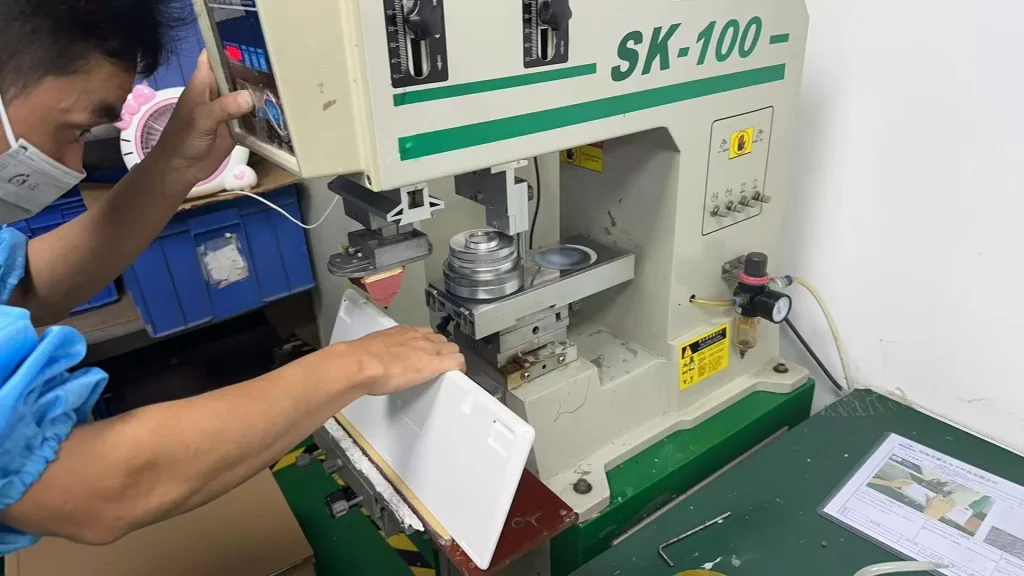
During LOGO transfer, the silicone pad moves above the keyboard and presses the LOGO onto the keyboard surface with appropriate pressure. Hengcang Electronic Technology precisely controls pressure and time to ensure each LOGO is clearly and completely transferred without damaging the keyboard surface.
Ink curing is the final step. Depending on the ink properties, Hengcang Electronic Technology uses natural air-drying, oven drying, or UV lamp curing to ensure the ink adheres firmly. The cured LOGO has excellent wear resistance and chemical resistance, ensuring it remains clear throughout the keyboard’s service life.
04 Quality Control & Precision Assurance
Position accuracy is the primary quality indicator for LOGO pad printing. Hengcang Electronic Technology uses high-precision positioning fixtures and visual positioning systems to ensure the position error of each LOGO on the keyboard does not exceed 0.1mm. This precision level is far higher than industry standards, ensuring a professional product appearance.
Color consistency is a key element of brand recognition. Hengcang Electronic Technology ensures consistent LOGO colors across different batches of keyboards through standardized ink mixing and regular equipment calibration. The use of professional colorimeters further enables quantitative control of color accuracy.
Clarity evaluation includes edge sharpness and detail reproduction. Hengcang Electronic Technology requires each LOGO to have clear edges, with no blurring, double images, or burrs. Regular spot checks using microscopes and magnifying glasses ensure even tiny fonts and pattern details are perfectly reproduced.
Adhesion testing is critical to verifying LOGO durability. Hengcang Electronic Technology uses the tape peel test to ensure the LOGO does not peel off during daily use. In addition, friction resistance tests and chemical resistance tests are conducted to simulate the keyboard’s long-term use environment.
05 Advantages & Applications of Pad Printing Process
The core advantage of the pad printing process lies in its strong adaptability. Whether for flat, curved, or slightly uneven surfaces, pad printing technology can achieve high-quality LOGO printing. This feature makes pad printing an ideal choice for keyboard LOGO production.
Compared with other printing technologies, pad printing is cost-effective. It is suitable for both small-batch customization and large-scale production needs. Hengcang Electronic Technology further improves production efficiency and reduces unit costs through automated equipment.
Color expressiveness is another major advantage of pad printing. The pad printing process can use multiple types of inks to achieve rich color effects. Whether for single-color LOGOs or complex multi-color logos, pad printing can accurately reproduce brand colors.
In the field of keyboard manufacturing, pad printing technology is particularly suitable for various keyboard surface materials, including common materials such as ABS and PBT. Hengcang Electronic Technology adjusts ink formulas and process parameters according to material characteristics to ensure optimal printing results on each keyboard.
06 Common Issues & Solutions
Unclear LOGOs can be caused by multiple factors. Wear on the steel plate or overly thin ink can affect printing clarity. Hengcang Electronic Technology’s solutions include regularly checking the steel plate condition and strictly controlling ink viscosity.
Position deviation usually stems from loose fixtures or inaccurate positioning. Hengcang Electronic Technology effectively avoids position deviation by regularly checking fixture tightness and adopting visual positioning systems. First-piece confirmation is conducted at the start of each shift to ensure positioning accuracy.
Insufficient adhesion may be caused by improper ink selection or incomplete curing. Hengcang Electronic Technology ensures strong bonding between the LOGO and the keyboard surface through strict ink screening and curing parameter control.
Color deviation may result from ink batch differences or equipment parameter changes. Hengcang Electronic Technology has established a standard color card system and regular color calibration procedures to ensure color consistency across different batches of products. At the same time, environmental temperature and humidity are strictly controlled to reduce external factors affecting color.
Stepping into the production workshop of Hengcang Electronic Technology, you can see pad printing machines operating rhythmically. Silicone pads accurately pick up ink from steel plates, then clearly transfer customer LOGOs to keyboard surfaces. Every link reflects the art of precision manufacturing.
As demand for personalized customization grows, Hengcang Electronic Technology continues to optimize the pad printing process, improving production efficiency and precision through automation and intelligent upgrades. In the future, pad printing technology will continue to play an important role in the keyboard manufacturing industry, helping brands showcase unique visual identities through their products.