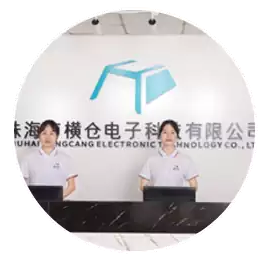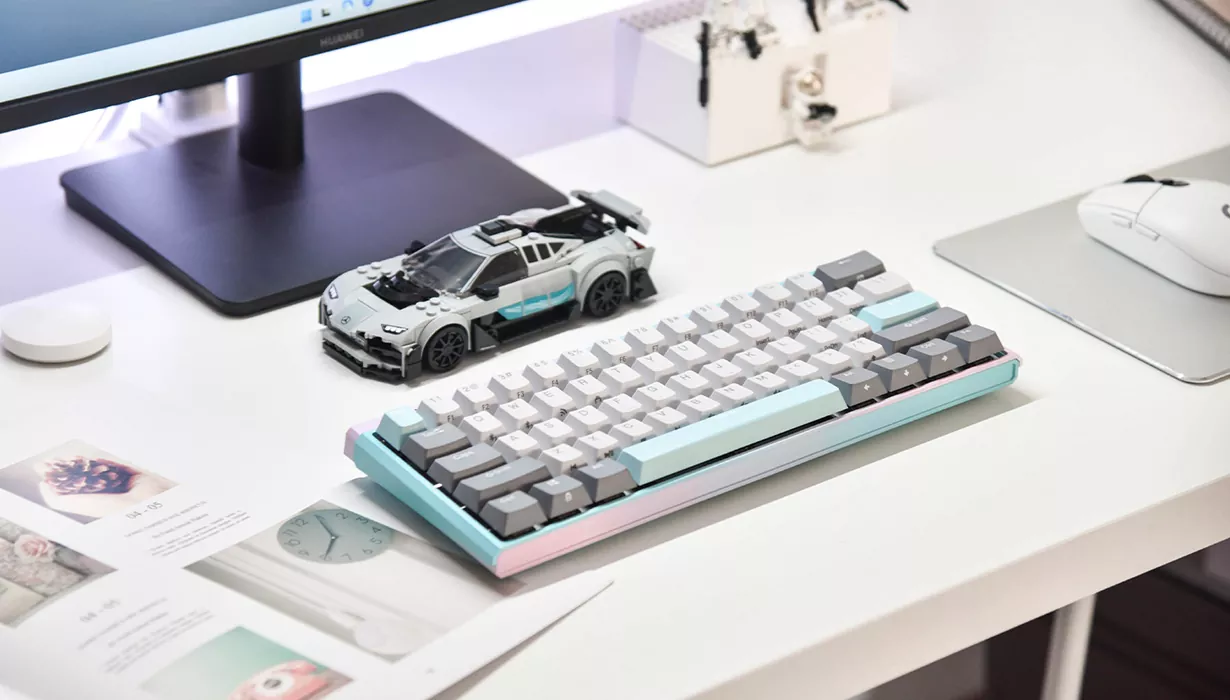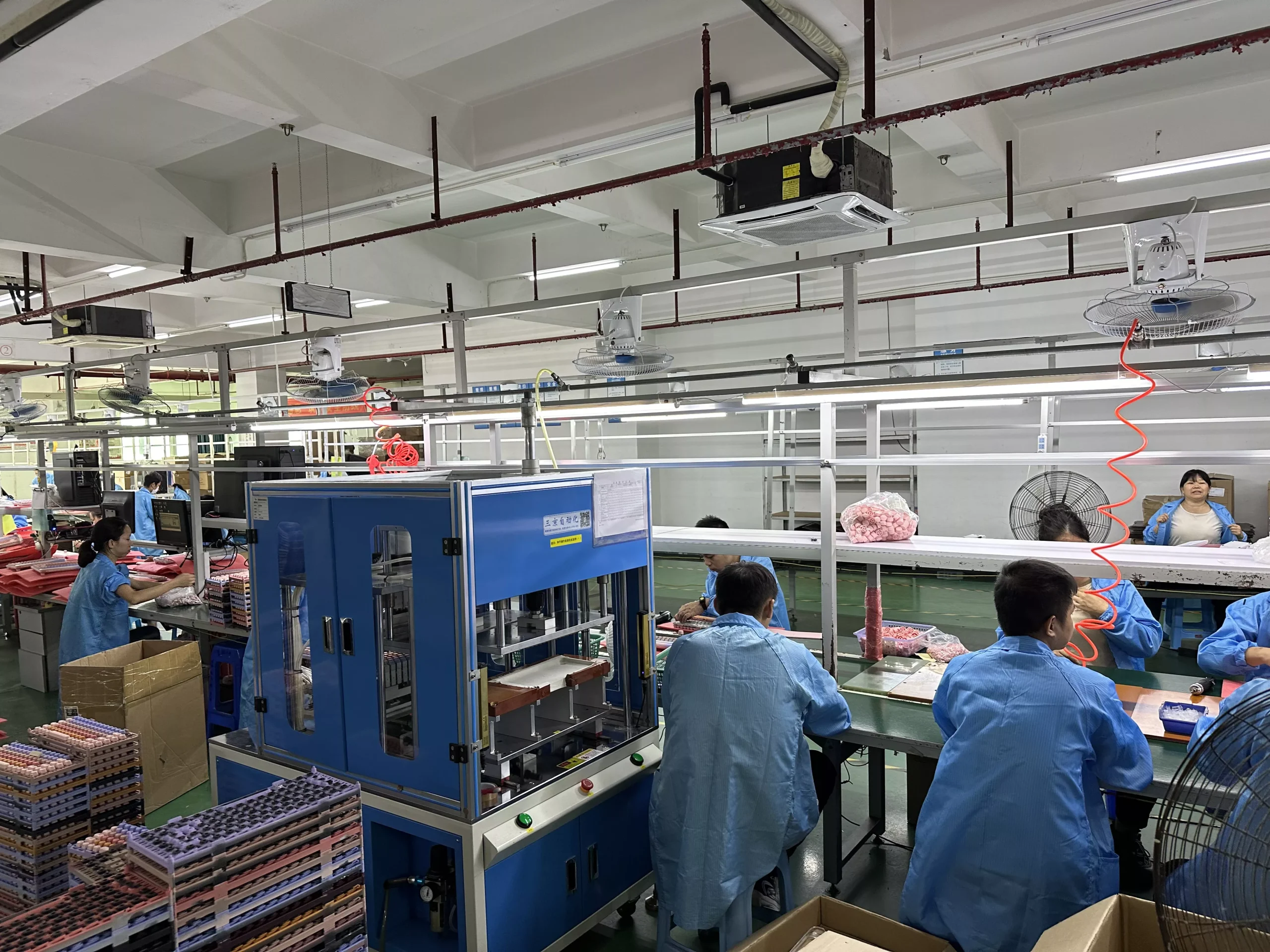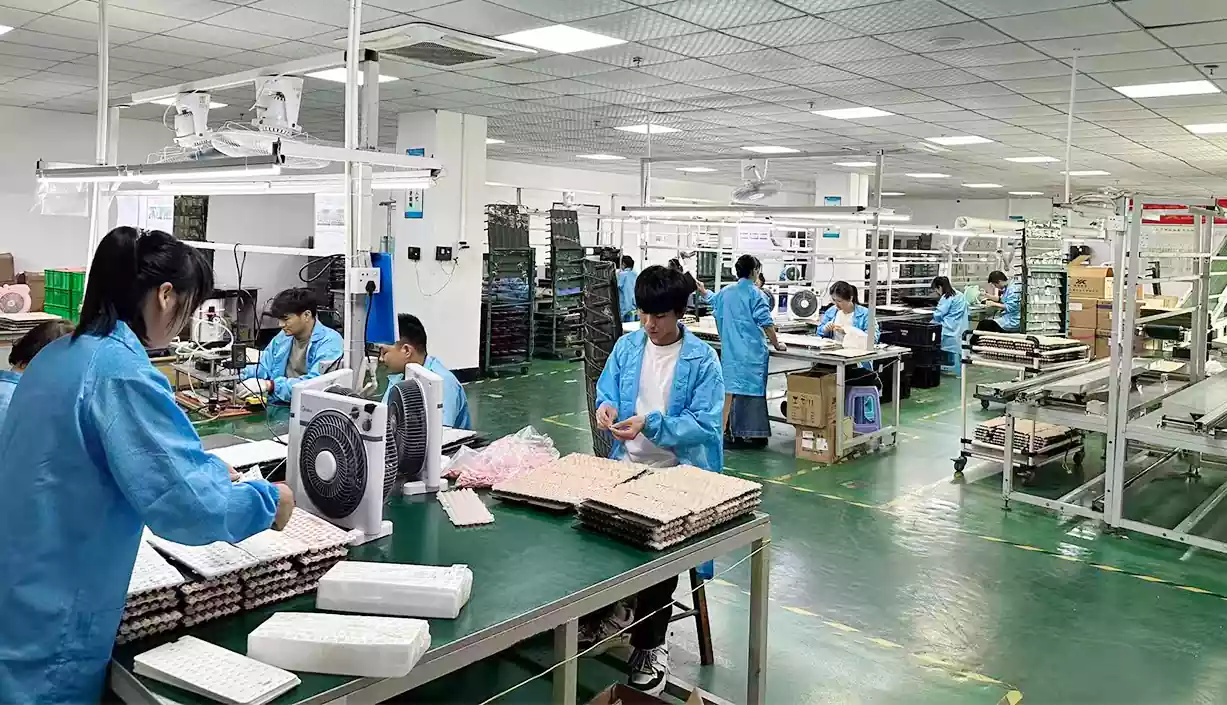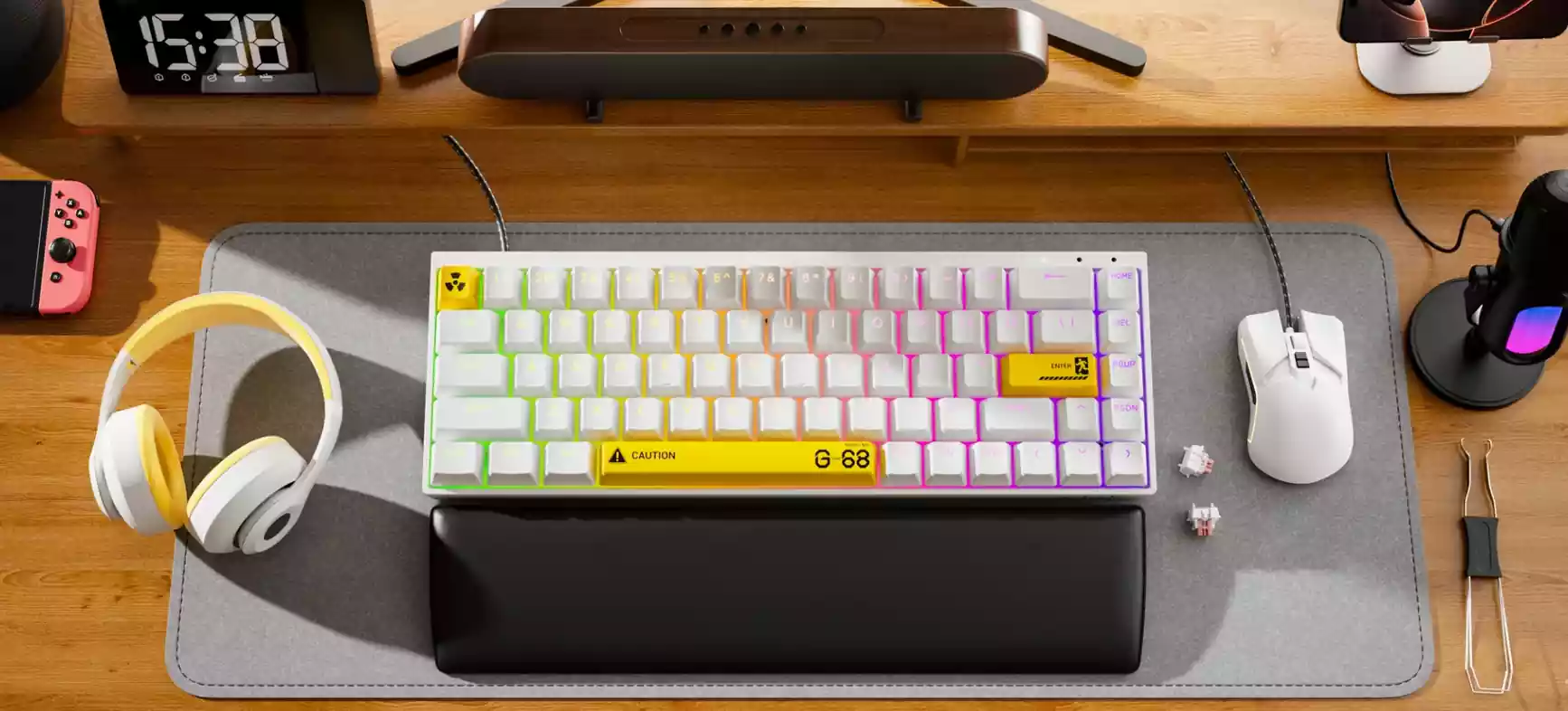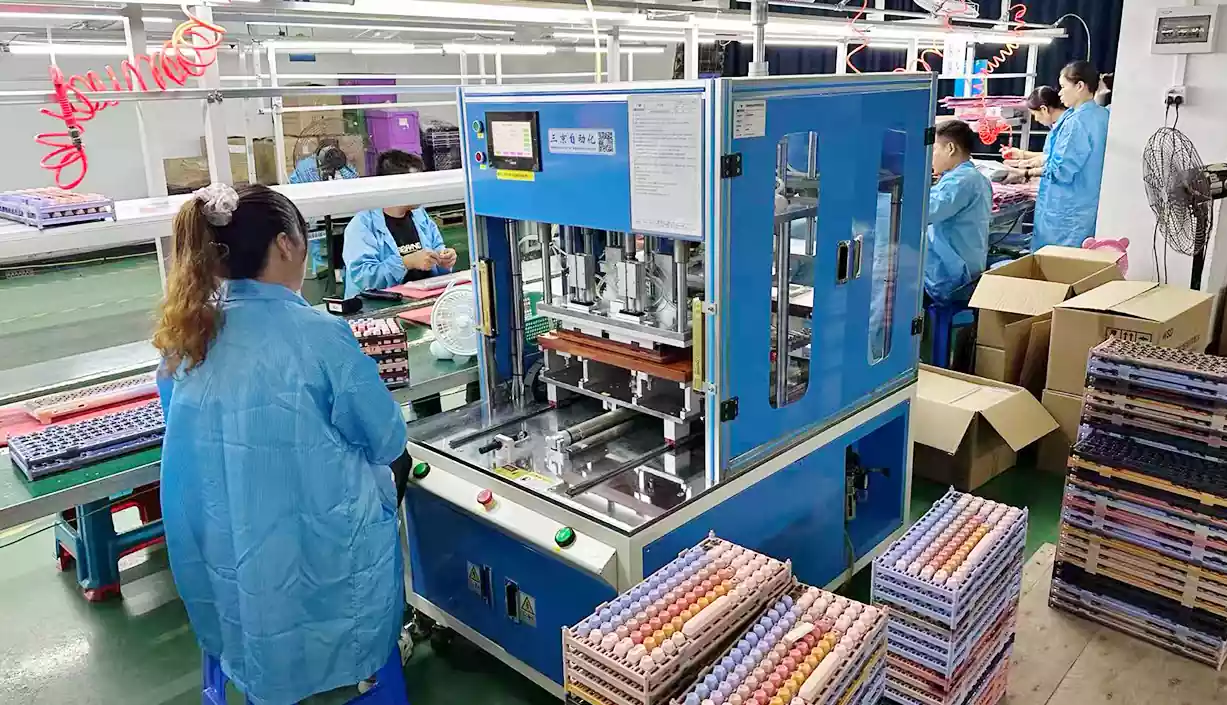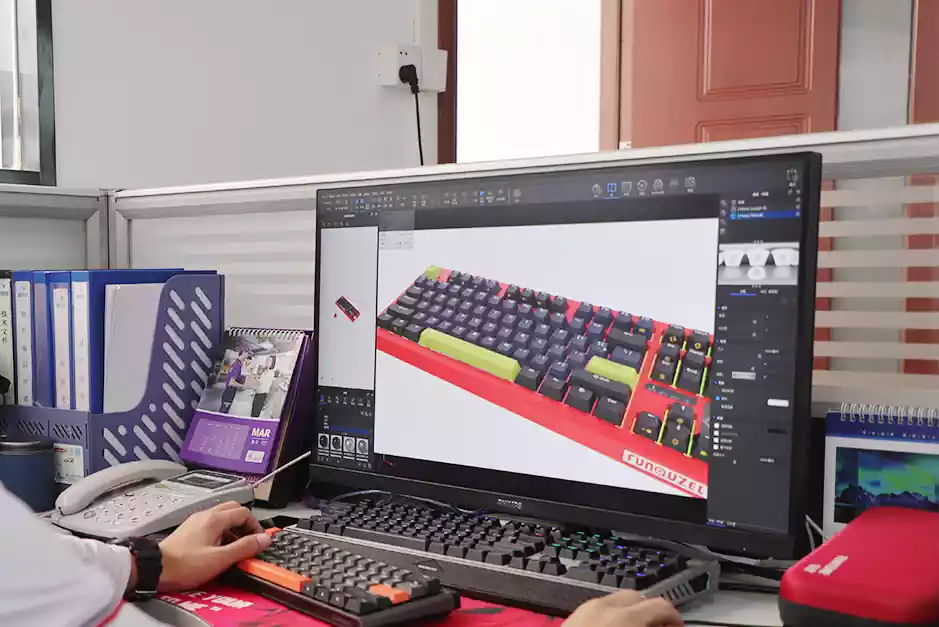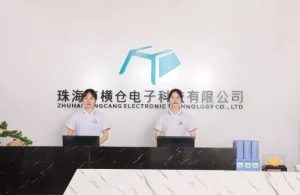
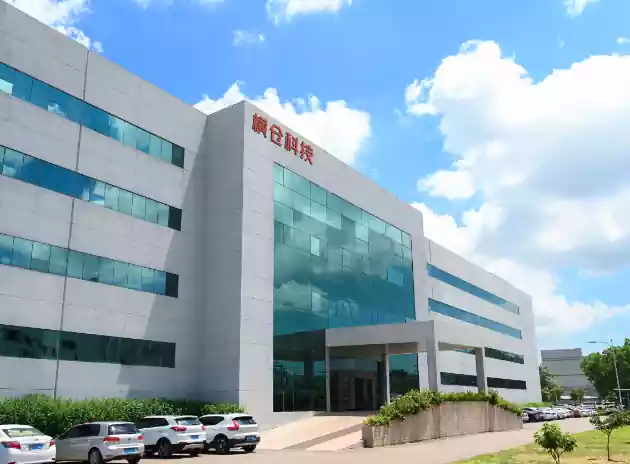
If you’re searching for a reliable ODM/OEM mechanical keyboard manufacturer with strict production standards and 25+ years of expertise, Zhuhai Hengcang Electronic Technology Co., Ltd. stands out as a leader in the industry. As China’s first manufacturer to achieve large-scale tactile feel adjustment for mechanical keyboards, Hengcang’s 5,000+㎡ factory combines automated production lines, rigorous quality testing, and customized solutions to deliver 1 million mechanical keyboards annually—covering RGB gaming keyboards, wireless Bluetooth models, and commercial terminal keyboards. In this blog, we’ll take an in-depth look at Hengcang’s factory production process, from raw material inspection to final shipment, and explain how it adheres to ISO 9001, CE, RoHS, and other global certifications to meet the needs of global brands.
1. Zhuhai Hengcang Electronics: 25 Years of Mechanical Keyboard Manufacturing Experience Lays the Foundation for Production
Before diving into the production process, it’s critical to understand why Hengcang is trusted by top brands like GRG Banking (global banking equipment leader), WAYCOS (South Korea), and Lofree (gaming/office keyboard brand). With nearly 25 years of R&D and manufacturing experience in mechanical keyboards, Hengcang holds the title of National High-Tech Enterprise and Guangdong Provincial Innovative SME, backed by over 20 patents in product design, structural upgrades, and process optimization.
The factory’s core strengths lie in:
- Scale & Capacity: 5,000+㎡ air-conditioned workshops with 7S management, supporting 1 million units/year (mechanical + standard keyboards) to handle both small-batch custom orders and large-scale OEM projects.
- Automation & Precision: In-house automated equipment (wave soldering machines, switch insertion machines, AOI visual inspection systems) and an independent SMT workshop to ensure consistent production quality.
- Quality Commitment: “Quality First, Customer Foremost” as the core philosophy, strictly following ISO 9001:2015 quality management system and complying with international certifications (CE, RoHS, FCC, PAHS, REACH).
2. Zhuhai Hengcang Mechanical Keyboard Factory: Full Production Process Breakdown
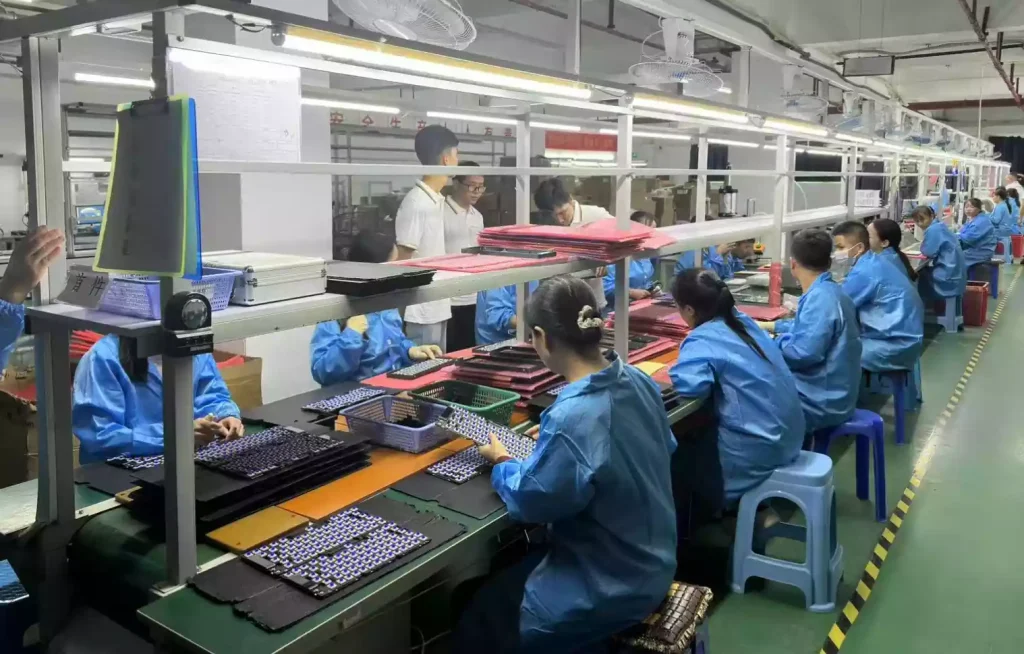
Hengcang’s production process is a closed-loop system covering raw material screening → component processing → precision assembly → multi-stage testing → eco-friendly packaging. Every step is designed to ensure tactile consistency, durability, and compliance with global standards—whether for RGB gaming keyboards or commercial terminal models.
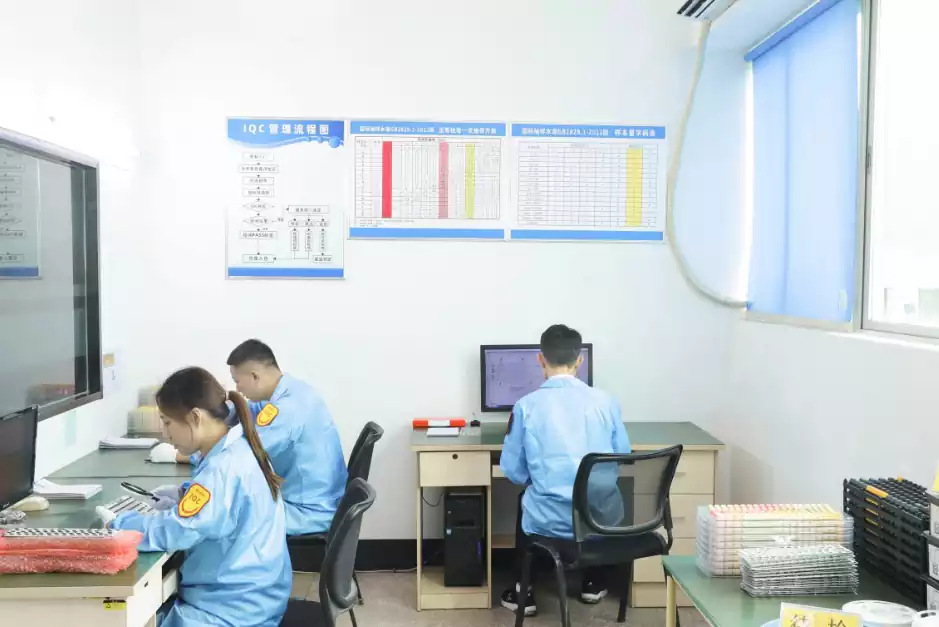
2.1 Step 1: Raw Material Incoming Inspection (IQC) — Ensuring Quality from the Source
“Bad raw materials lead to bad products” is a golden rule at Hengcang. Before any component enters the production line, it undergoes strict Incoming Quality Control (IQC) to eliminate defects early.
Key IQC Procedures:
- Component Selection: Hengcang only sources industry-grade materials, including:
- Keycaps: PBT double-shot keycaps (wear-resistant, anti-oil) and ABS textured keycaps (for cost-effective options).
- Switches: Cherry MX switches, Gateron switches, and hot-swappable switch sockets (tested for 50M+ clicks).
- PCBs: High-temperature resistant PCBs (to avoid soldering damage) and copper-clad boards (for stable connectivity).
- Compliance Testing: Using RoHS analyzers and wire testing machines, Hengcang screens for restricted substances (lead, cadmium, mercury) in plastics, metals, and PCBs—ensuring all materials meet RoHS and REACH standards for global market access.
- Supply Chain Oversight: The factory maintains a robust supply chain management system, partnering with verified suppliers to ensure consistent material quality. Any non-compliant components are rejected immediately, with detailed records kept for traceability.
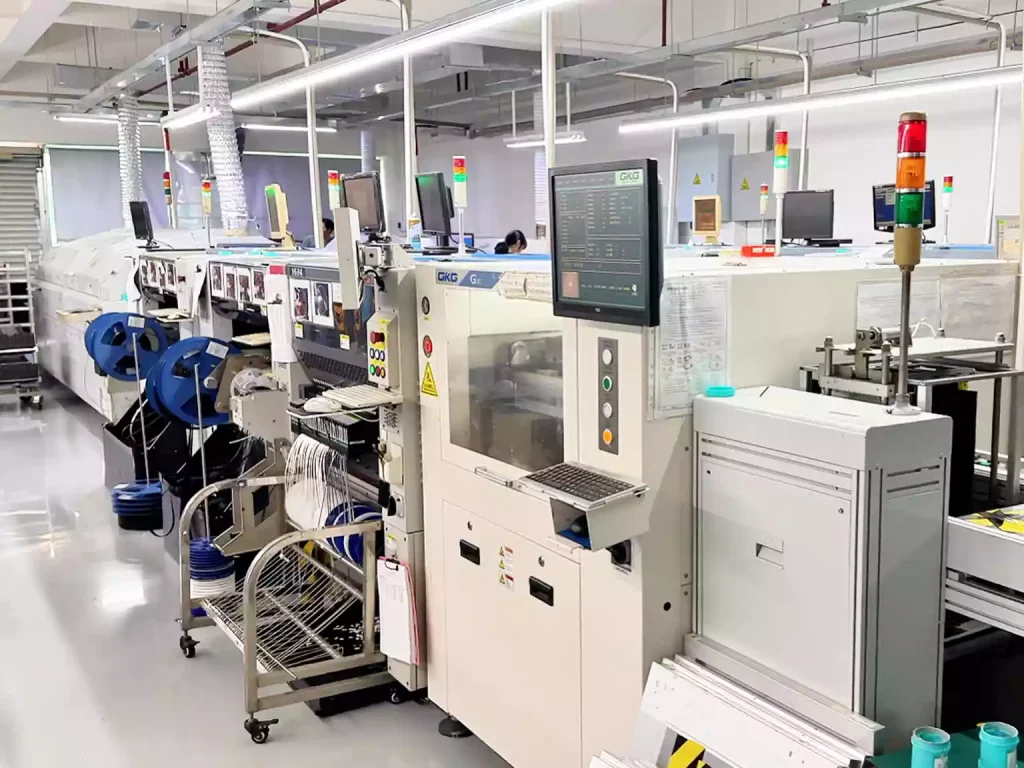
2.2 Step 2: SMT Workshop — Precision Soldering of PCB Boards (Anti-Static + Automation)
The Surface Mount Technology (SMT) workshop is the heart of Hengcang’s electronic component production. As a critical step for keyboard functionality, this workshop is equipped with anti-static floors and temperature/humidity control to protect sensitive electronics.
SMT Production Details:
- Automated Soldering: Wave soldering machines are used to solder electronic components (resistors, capacitors, chips) onto PCBs with precision. This reduces manual errors and ensures uniform solder joints—critical for preventing short circuits or signal loss.
- AOI Visual Inspection: After soldering, PCBs pass through AOI (Automatic Optical Inspection) systems—high-resolution cameras that detect even micro-defects (e.g., missing components, cold solder joints). The AOI system achieves “zero-defect” screening, with a detection accuracy of 99.9%.
- Anti-Static Protocols: All workers wear anti-static wristbands and smocks, and PCBs are stored in anti-static bags to avoid electrostatic discharge (ESD) damage— a common issue in keyboard electronics that can cause permanent functionality failures.
2.3 Step 3: Parts Processing — Customized Production (Keycaps, Housings, All Molds Free of Charge)
Hengcang differentiates itself by offering 100% mold cost coverage for clients—eliminating upfront investment in keycap, housing, and switch mounting molds. This step focuses on turning raw materials into customized components tailored to OEM/ODM requirements.
Key Processing Stages:
- Keycap Manufacturing:
- For PBT keycaps: Double-shot injection molding is used to integrate legends (characters) into the keycap—ensuring legends never fade (even after years of use).
- For branded designs: Silk screen/pad printing machines apply logos or custom patterns to keycaps, with UV curing to enhance wear resistance.
- Housing Production: High-quality ABS or aluminum alloy is molded into keyboard housings (using Hengcang’s in-house molds). The housings are then sandblasted or painted to achieve a premium texture (e.g., matte finish for gaming keyboards).
- Switch Preparation: Hot-swappable switch sockets are pre-installed on PCBs for models that require easy switch replacement—ideal for gaming brands targeting enthusiasts. For fixed-switch models, switches are pre-tested for tactile consistency (e.g., 45±5g actuation force for linear switches).
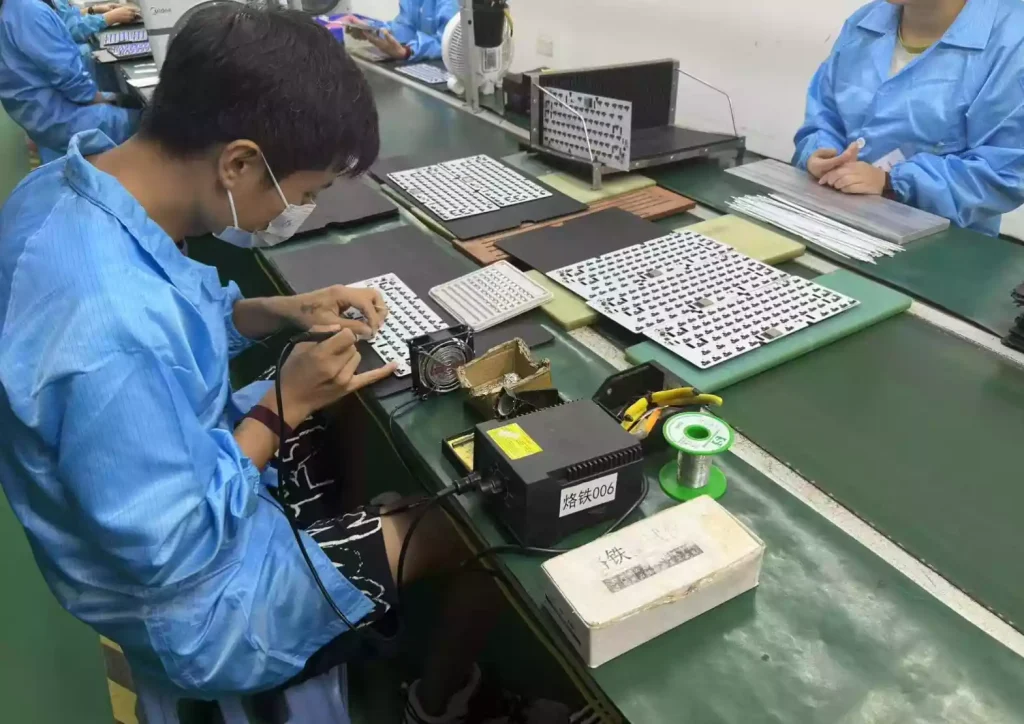
2.4 Step 4: Soldering and Switch Insertion — The Industry's First Large-Scale Tactile Adjustment Technology
As the first manufacturer in the mechanical keyboard industry to pioneer large-scale tactile feel adjustment, Hengcang’s switch assembly process is a technical highlight. This step ensures every keyboard delivers consistent, satisfying tactile feedback.
Precision Assembly Steps:
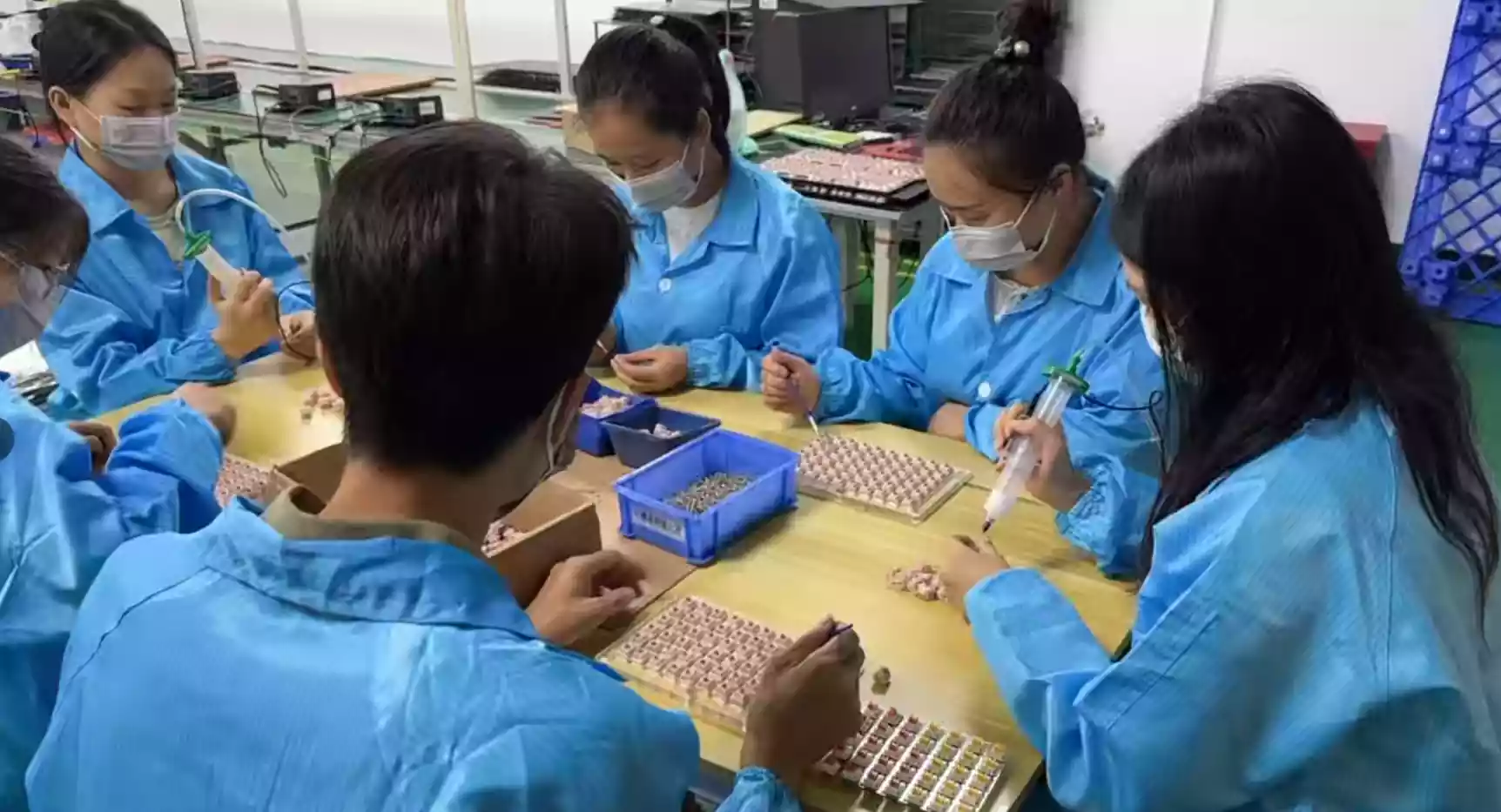
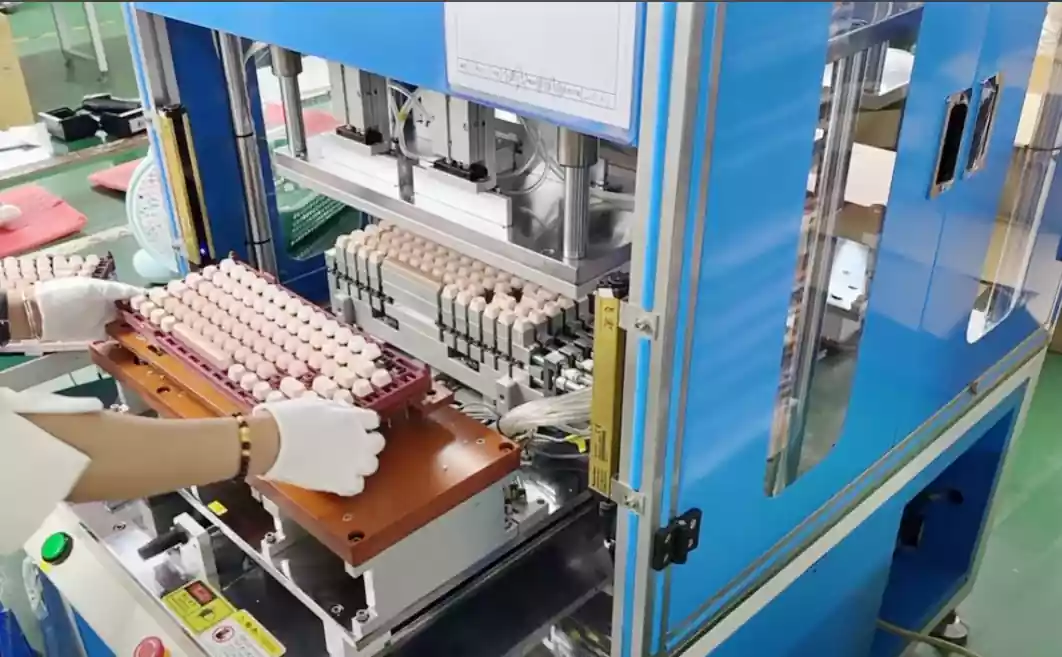
- Automatic Switch Insertion: Switch insertion machines (custom-developed by Hengcang) mount switches (Cherry MX/Gateron) onto PCBs with uniform pressure. This avoids manual insertion errors (e.g., misaligned switches) that cause uneven key travel.
- Tactile Calibration: For gaming keyboards, engineers adjust switch springs or stem lubrication to fine-tune tactile feedback—e.g., crisp click for Cherry MX Blue switches, smooth linear feel for Cherry MX Red switches. This calibration is done via key press force testers, ensuring consistency across every unit in a batch.
- Post-Insertion Welding: Critical connections (e.g., switch pins to PCBs) are re-soldered manually by skilled technicians to reinforce stability—especially for commercial keyboards used in high-frequency scenarios (e.g., banking terminals).
2.5 Step 5: Final Assembly Line (A/B Lines) — 7S Management + Automated Efficient Assembly
Hengcang’s factory features two dedicated final assembly lines (Line A for mechanical gaming keyboards, Line B for commercial keyboards)—both operating under 7S management (Sort, Set in Order, Shine, Standardize, Sustain, Safety, Save) to ensure efficiency and cleanliness.
Final Assembly Process:
- Keycap Installation: Automated keycap insertion tools press keycaps onto switches—faster and more consistent than manual installation. Workers then perform a quick check to ensure no keycaps are loose.
- Backlight Tuning: For RGB gaming keyboards, technicians calibrate backlight uniformity using LED aging testers. This ensures no LED diodes are dim or flickering, and dynamic effects (e.g., rainbow, breathing) work seamlessly.
- Firmware 烧录: Custom firmware (e.g., key remapping, macro support for gaming) is loaded onto the keyboard’s controller via USB. Each unit is tested to confirm firmware compatibility.
- Casing Assembly: Housings are attached to the PCB/switch assembly using automatic screwdriving machines—ensuring screws are tightened to the correct torque (prevents housing warping).
2.6 Step 6: Full-Process Testing — 50M+ Key Lifespan + Extreme Environment Verification
Hengcang’s professional testing lab is equipped with 12+ types of industry-standard equipment to validate every keyboard’s durability, functionality, and compliance. Testing is divided into semi-finished product testing and finished product factory testing to catch defects at every stage.

Key Testing Procedures:
| Test Type | Equipment Used | Purpose | Standard |
|---|---|---|---|
| Key Durability Test | Key Life Testers | Validate switch lifespan | 50M+ clicks (no failure) |
| Tactile Consistency | Key Press Force Testers | Ensure uniform actuation force | ±5g deviation from target |
| Environmental Resistance | Constant Temperature & Humidity Chambers | Test performance in harsh conditions | -20°C to 60°C, 90% humidity (24h) |
| Extreme Condition Test | High-Low Temperature Thermal Shock Chambers | Simulate transportation/storage in extreme climates | 100 cycles (no functionality loss) |
| Drop Test | Drop Testers | Check structural strength | 1.2m drop (corner/edge) on concrete |
| Wireless Performance (for Bluetooth models) | Battery Performance Testing Systems | Validate battery life & connectivity | 30h+ use on single charge; 10m connectivity range |
| ESD Safety | ESD Testing Platforms | Prevent electrostatic damage | Passes 8kV contact discharge test |
After testing, only keyboards with a 100% pass rate proceed to packaging. Any defective units are flagged for rework or disposal—with root cause analysis to prevent future issues.
2.7 Step 7: Eco-friendly Packaging and Global Distribution
Hengcang prioritizes sustainability in its final step: packaging. All materials are eco-friendly (recyclable cardboard, soy-based inks) to reduce carbon footprint—aligning with global brands’ sustainability goals.
Packaging & Shipment Details:
- Custom Packaging: OEM clients can request branded boxes (with their logos) or neutral packaging for white-label products.
- Protection Measures: Cardboard compression testers verify packaging strength to prevent damage during shipping. Bubble wrap or foam inserts are used for fragile components (e.g., aluminum housings).
- Global Delivery Readiness: The factory works with international logistics partners to support door-to-door delivery to North America, Europe, Southeast Asia, and other regions. All shipments include compliance documents (CE, RoHS certificates) for smooth customs clearance.
3. Why Do Global Brands Choose Zhuhai Hengcang's OEM/ODM Manufacturing Services?
Beyond its rigorous production process, Hengcang’s value lies in its customer-centric services—designed to simplify the manufacturing journey for brands of all sizes:
- End-to-End Customization: From ID (Industrial Design) to mass production, Hengcang’s 10+ senior R&D engineers handle layout tweaks (60% compact, TKL, full-size), RGB backlight tuning, and hot-swappable feature integration.
- DFM Optimization: Design for Manufacturability (DFM) checks reduce prototype iterations by 30% (from 5–7 weeks to 3–4 weeks), accelerating time-to-market.
- No Upfront Costs: 100% mold cost coverage (keycap, housing, switch molds) eliminates financial risks for startups or brands launching new lines.
- After-Sales Support: Post-delivery troubleshooting, maintenance guidance, and replacement parts ensure long-term partnership success.
4. Contact Zhuhai Hengcang Electronic Technology Co., Ltd. to Start Mechanical Keyboard Cooperation
If you’re looking for a reliable ODM/OEM mechanical keyboard manufacturer with proven production expertise, strict quality control, and global delivery capabilities, Hengcang is your trusted partner.
- Email: [email protected]
- Phone: +86 15913234808
- Factory Address: Zhuhai, Guangdong, China (welcome for factory visits)
Whether you need RGB gaming keyboards, wireless Bluetooth models, or commercial terminal keyboards, Hengcang’s 25-year experience ensures your products meet global standards—on time, on budget, and on quality.
Keywords: Zhuhai Hengcang Electronic Technology Co., Ltd., mechanical keyboard factory production process, ODM mechanical keyboard manufacturer, OEM mechanical keyboard production, ISO 9001 mechanical keyboard manufacturing, RoHS compliant mechanical keyboard, RGB mechanical gaming keyboard production, wireless Bluetooth mechanical keyboard factory, 25-year mechanical keyboard manufacturing experience