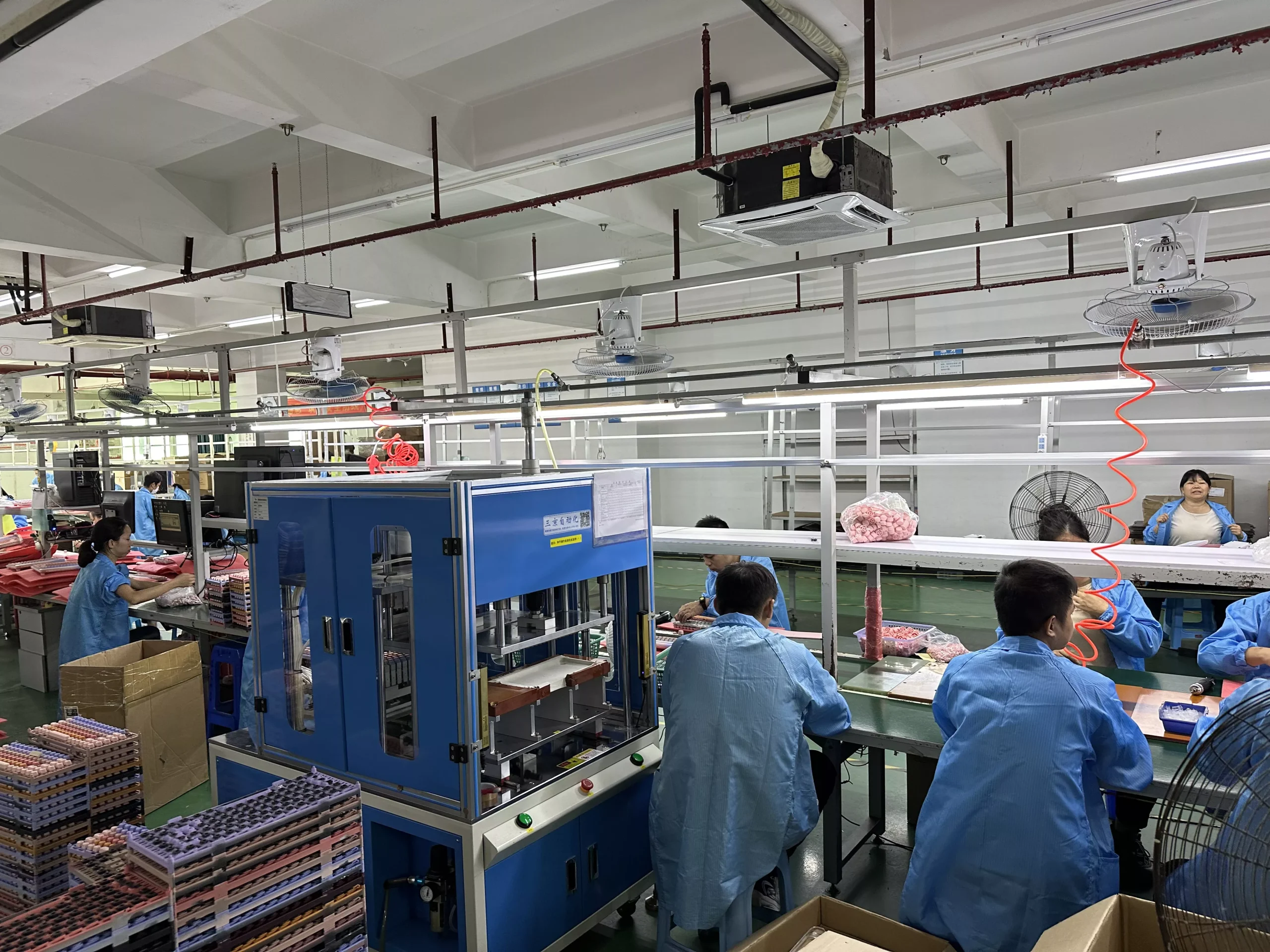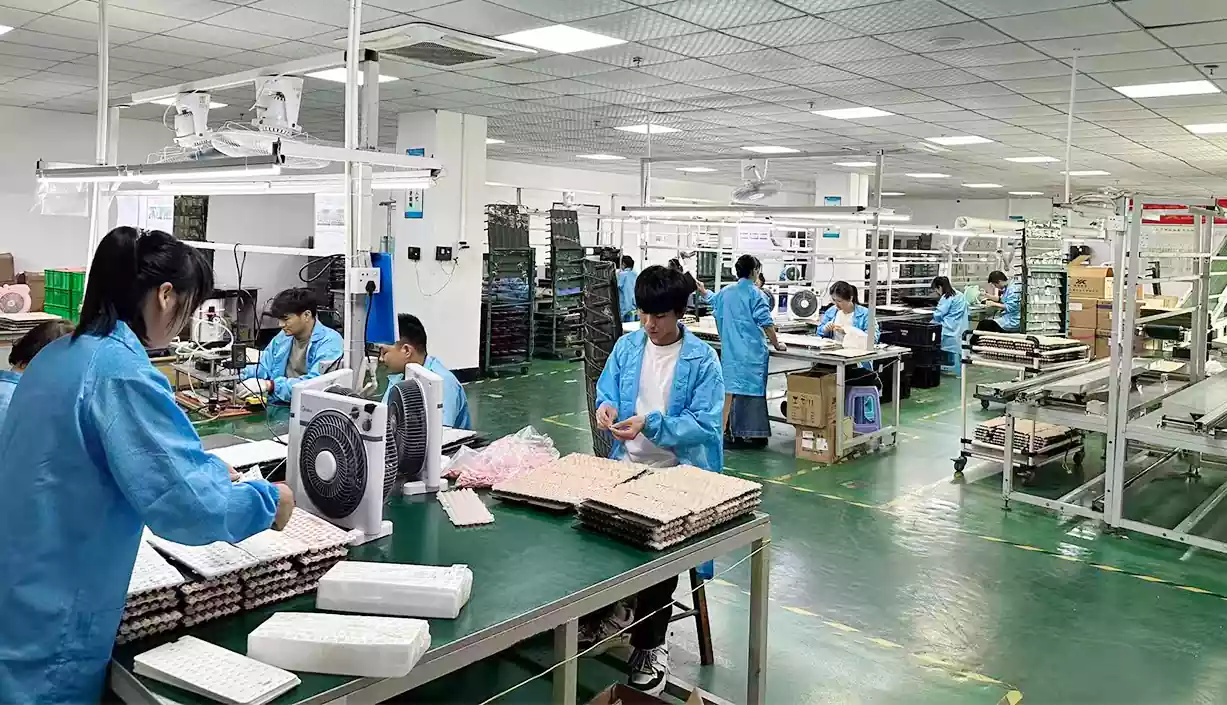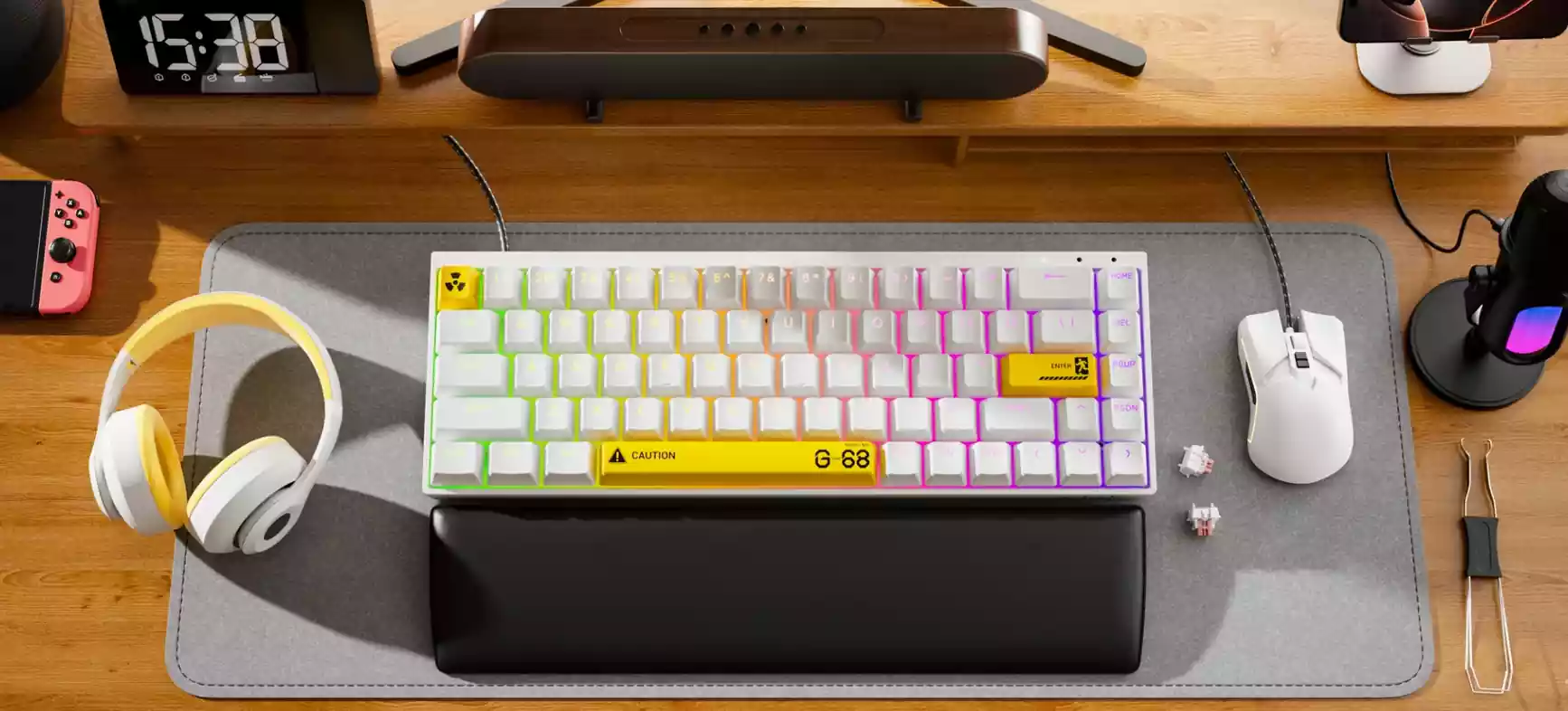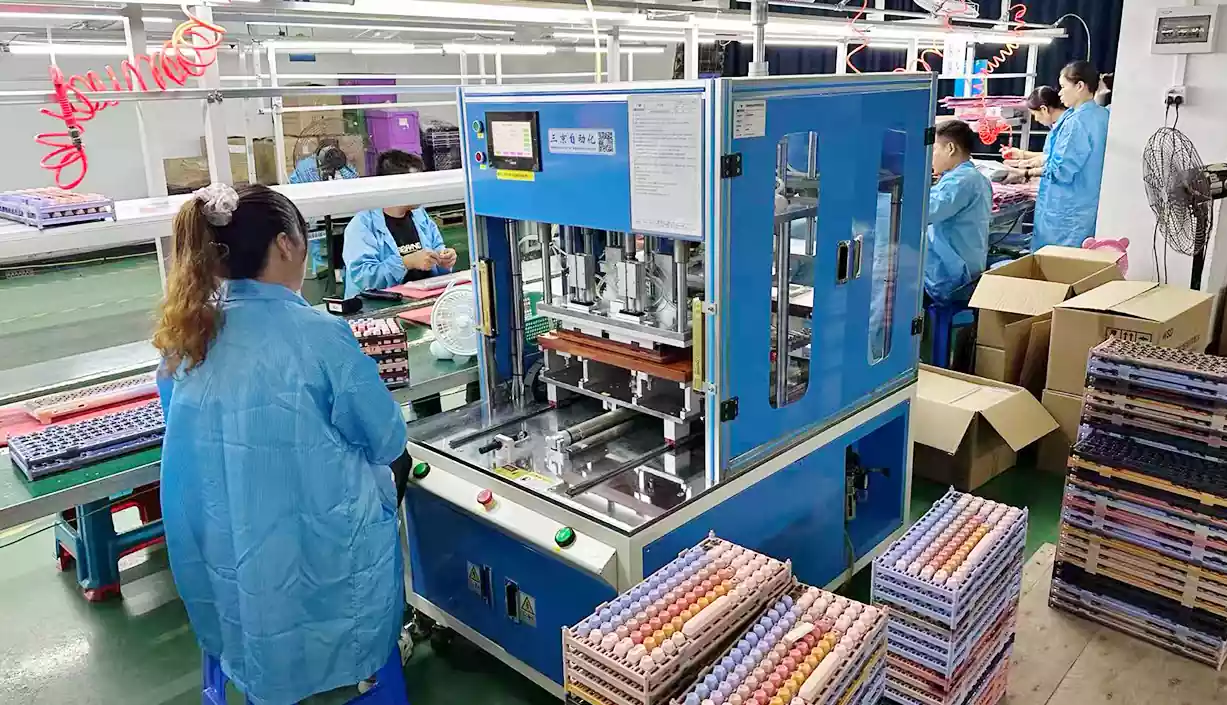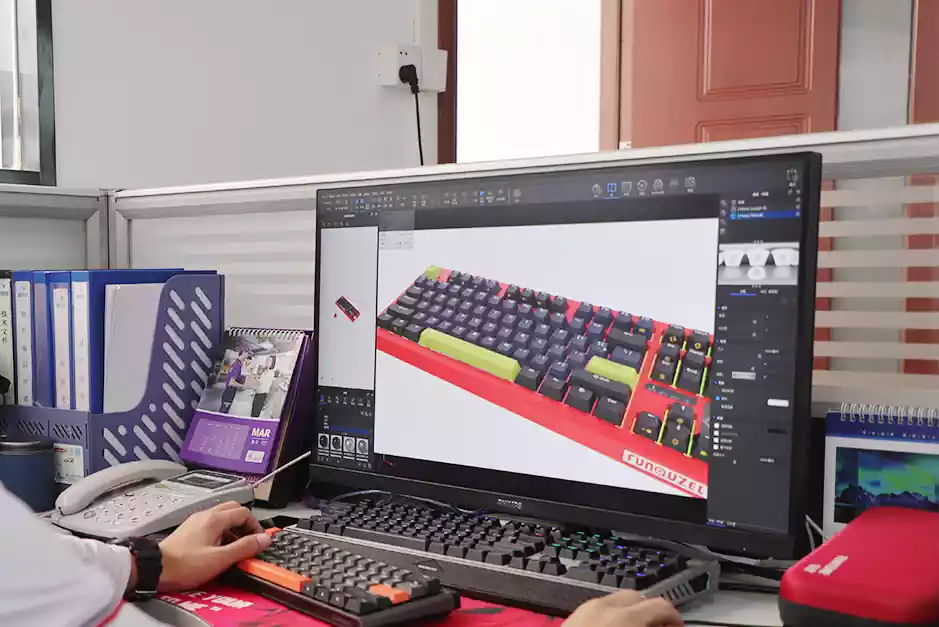
As a professional keyboard OEM/ODM manufacturer with over 20 years of deep expertise in keyboard manufacturing, HengCang Technology’s core technical innovations are not limited to inventing entirely new keyboard forms. Instead, they lie in the deep integration of cutting-edge technology, precision engineering, and large-scale manufacturing to solve industry pain points—ultimately building an irreplaceable competitive edge. Its innovation focus spans multiple dimensions, including tactile feel standardization, structural precision, smart production, and rapid responsiveness to new industry trends.
1. Core Process Innovation: Industrializing & Standardizing "Tactile Feel."
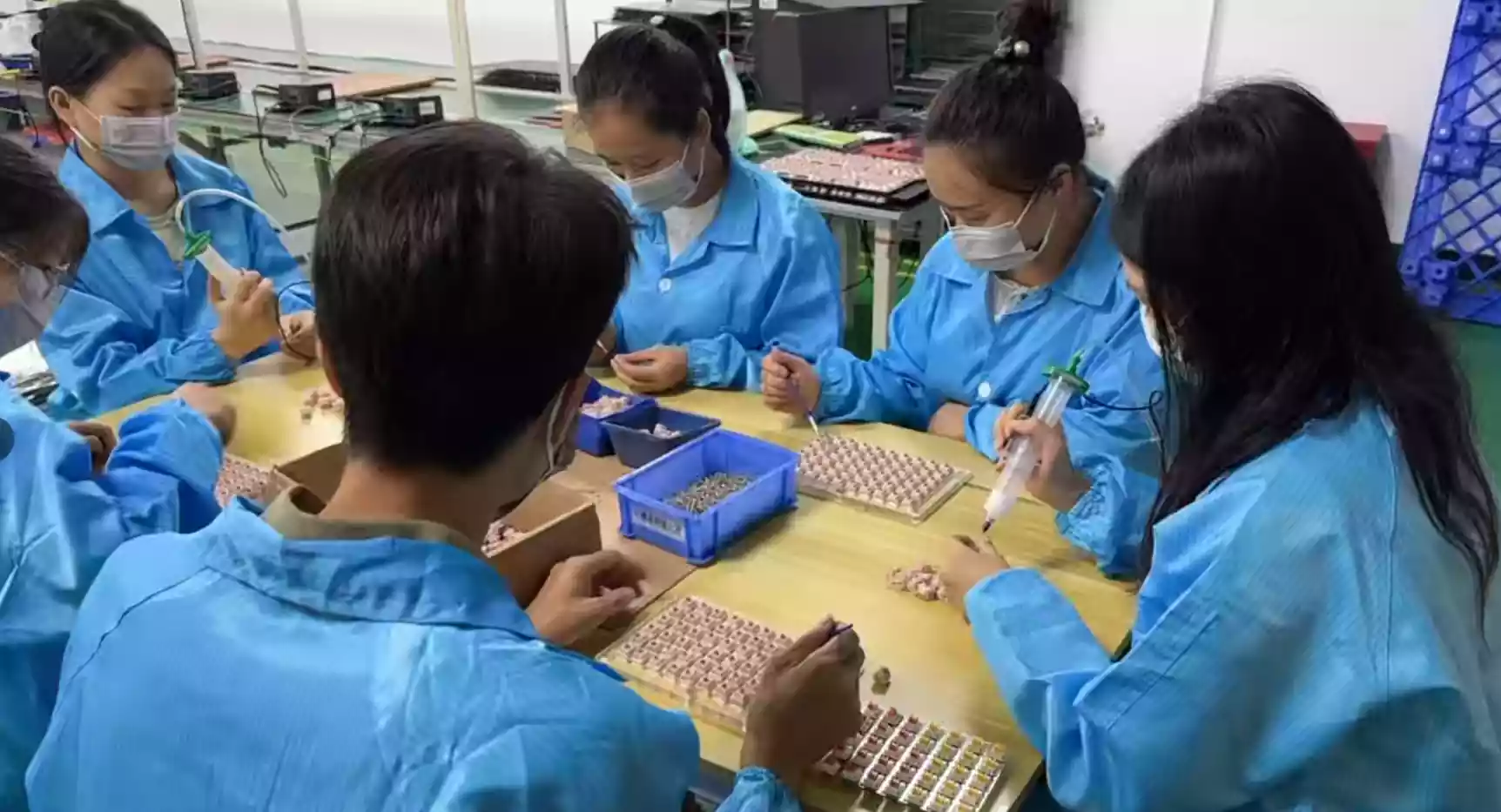
In the mechanical keyboard sector, "tactile feel" is the soul of the product—but it is also the most difficult to quantify, relying heavily on technicians’ personal expertise. HengCang Technology claims to be "the first manufacturer in the industry to achieve batch tactile tuning," a groundbreaking process innovation in itself. This technology means the company has transformed subjective, sensory user experiences into mass-producible, highly consistent production standards through a systematic engineering approach.
Data-Driven Quantitative Tuning System
To achieve "batch tactile tuning," tactile feel must first be parameterized. This likely involves precise measurement and definition of multiple metrics: key pressure curves, actuation travel, rebound force, key wobble amplitude, and bottom-out sound frequency spectra. HengCang has probably built its own tactile feel database and standard curves to serve as benchmarks for production calibration.
R&D of Specialized Equipment & Jigs
Traditional tactile tuning depends on skilled workers’ manual feel and experience, is low in efficiency and poor in consistency. HengCang’s innovation undoubtedly includes developing or adopting specialized automated/semi-automated tuning equipment, such as:
- Precision dispensers for controlling lubricant volume on stabilizers
- Multi-point pressure testers for verifying key consistency
- Resonance detection and elimination devices for reducing unwanted noise. These tools ensure every large key (e.g., spacebar, Enter key) meets preset tactile standards.
Application of Materials Science & Structural Mechanics
Tactile feel is influenced by multiple materials and structures: switches, keycaps, plates, gaskets, and casings. HengCang’s technical accumulation allows it to deeply understand the properties of different materials (PBT, ABS, silicone, PORON foam) and how structures (Top Mount, Gasket Mount, Plate Mount) impact final feel and sound. It can optimize material combinations and structures to stably deliver target tactile experiences while controlling mass-production costs.
2. Structural Design & Material Application Innovations
Beyond core tuning processes, HengCang demonstrates innovation in product structure and material use—evident from its business focus and industry trends.
Segment-Specific Structural Optimization
HengCang specializes in gaming keyboards, POS keyboards, and custom keyboards—each with distinct structural needs:
- Gaming Keyboards: Pursue extreme responsiveness, stability, and durability. Innovations may include optimized PCB circuit designs to reduce input latency, robust one-piece structures for high-intensity gaming, and rational layouts for hot-swappable switches and RGB backlighting modules.
- POS Keyboards: Require high water/dust resistance, oil resistance, and impact resistance. Innovations could involve developing better-sealed silicone bowl structures, special waterproof channels, and more corrosion-resistant coatings/materials.
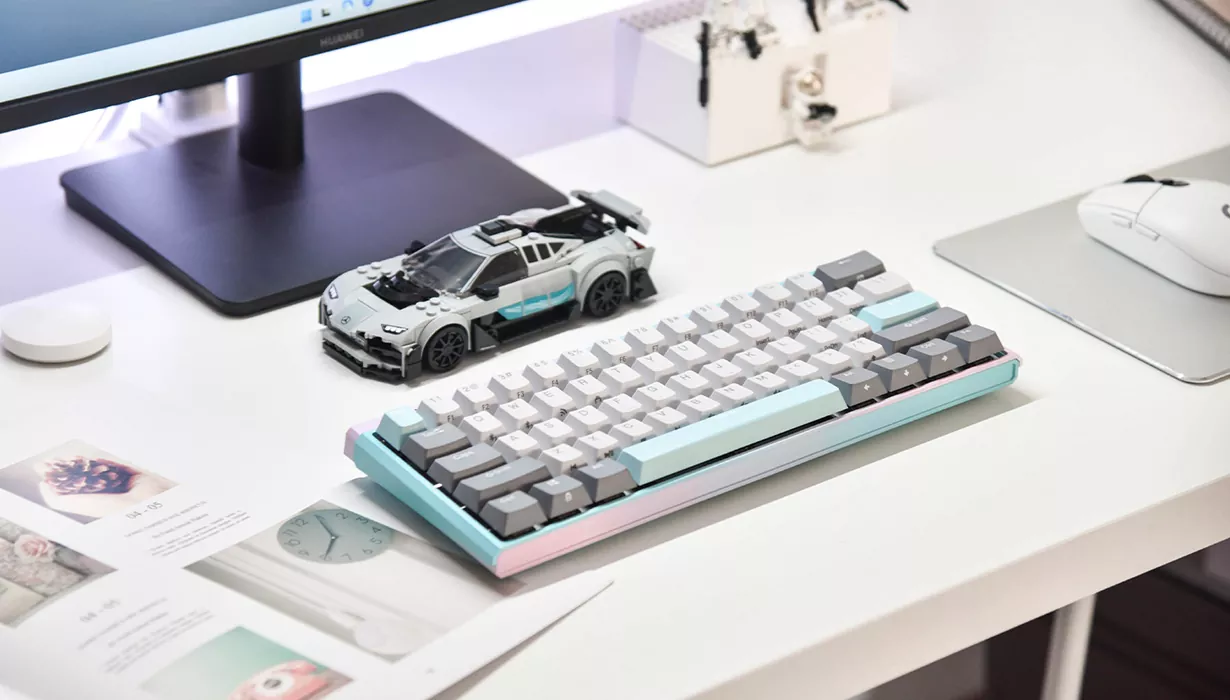
- Custom Keyboards: Cater to personalization, offering the most room for structural innovation. As an ODM, HengCang must implement clients’ creative designs—such as complex Gasket mount structures, detachable magnetic top covers, and modular layout designs. This demands high flexibility in mold development, CNC machining, and assembly processes.
Rapid Integration of New Materials & Technologies
Keyboard industry innovation (e.g., magnetic switches, optical switches) is largely driven by upstream switch manufacturers. HengCang’s core innovation lies in its ability to quickly and maturely integrate these new technologies into its product ecosystem. For example, when magnetic switches gained popularity in esports for adjustable travel and ultra-fast actuation, HengCang (as a manufacturer) needed to solve challenges like stable integration with PCBs/structures and developing/adapting firmware for driver support. This ability to transform lab-scale technology into large-volume, high-yield commercial products is a critical technical barrier for keyboard OEMs.
3. Smart Upgrades to Production & Quality Control Systems
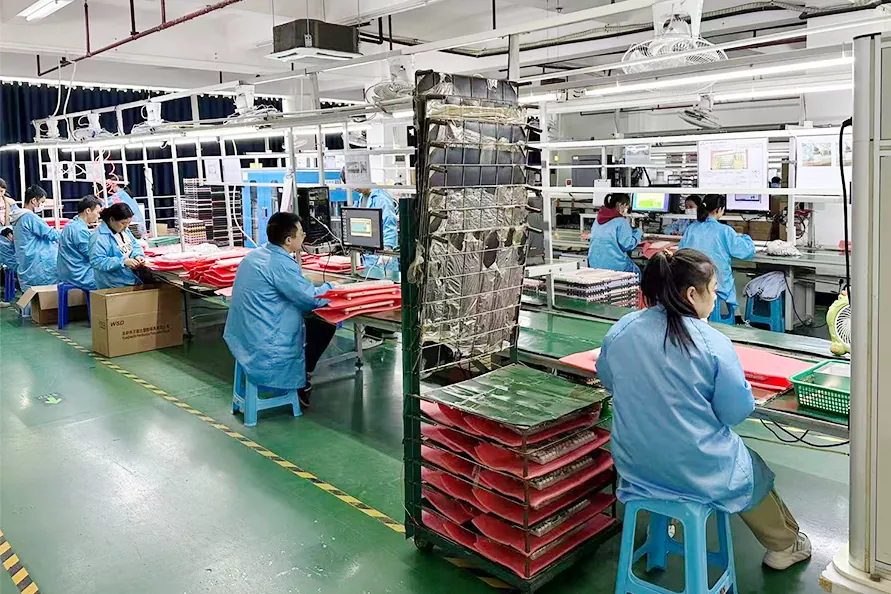
Genuine industrial capabilities rely on continuous innovation in manufacturing. While search results do not detail HengCang’s production lines, insights from high-end manufacturing (e.g., Jack Technology’s AI-driven solutions for smart sewing machines, Atom Robot’s microsecond-level precision motion control) suggest its innovation directions:
Automated & Flexible Production
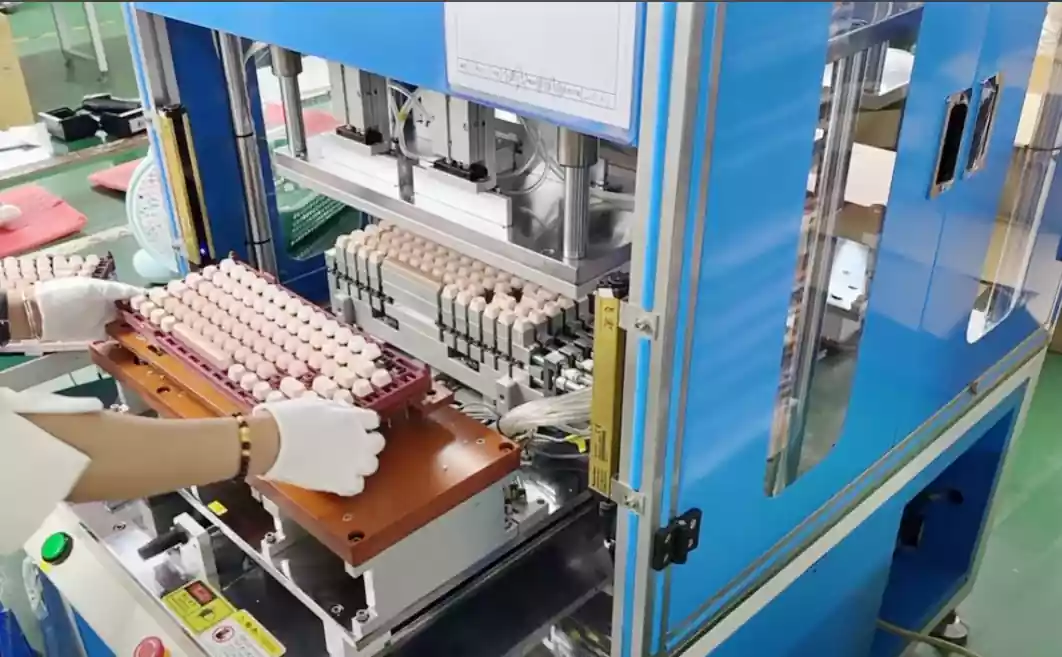
To meet custom keyboard demands (small batches, diverse models) while ensuring consistent batch tactile tuning, production lines must be highly automated and flexible. Innovations may include:
- Automated switch insertion & soldering equipment: Ensures thousands of switches are installed precisely and vertically—the foundation of consistent tactile feel.
- Smart visual inspection systems: Automatically check keycap printing quality, switch installation alignment, and LED bead defects—replacing manual inspection to boost efficiency and accuracy.
- Modular production line design: Enables quick reconfiguration of tooling and programming for different keyboard layouts/structures.
Data-Driven End-to-End Quality Control
Innovation extends beyond equipment to quality management systems. HengCang has likely built a full-process data collection system covering Incoming Quality Control (IQC), In-Process Quality Control (IPQC), and Final Quality Control (FQC). Critical parameters (e.g., key pressure, actuation point) for every keyboard are recorded and analyzed, forming big data feedback loops to continuously optimize process parameters—similar to how BoWei Technology improved chip manufacturing yields to over 98% through process innovation.
4. Innovative Collaborative R&D & Ecosystem Integration
HengCang’s innovations are not developed in isolation but embedded in a broader industrial ecosystem.
Deep Collaboration with Upstream Tech Suppliers
As a manufacturing hub, HengCang works closely with switch manufacturers (Gateron, Kailh, TTC), main control chip suppliers, and software developers. Its innovation includes early access to new technology samples, joint engineering validation, and mass-production optimization—solving compatibility/stability issues to accelerate the transition from concept to commercial product.
ODM-Driven Client Product Innovation
HengCang has a "dedicated design team," meaning its innovation extends beyond manufacturing to product definition. Leveraging market trend insights (customization, wireless, lightweight design), it proactively offers clients competitive product solutions and prototypes. This "turnkey" ODM service is itself a business model innovation—transforming technical expertise into client value.
Conclusion
HengCang Technology’s technical innovations in keyboard OEM form a multi-dimensional project, spanning micro-level tactile tuning to macro-level production systems. Its core strength is not in single "revolutionary" technologies, but in systematically solving the "impossible triangle" of high-end keyboard manufacturing (quality, efficiency, cost, personalization) through solid engineering innovations—including tactile quantification, structural optimization, smart production, and ecosystem collaboration. This positions HengCang as a "high-end quality / capable manufacturer / direct source producer" in the competitive market. Such continuous, problem-solving innovation—rooted in deep manufacturing experience—epitomizes China’s shift from "manufacturing" to "intelligent manufacturing."