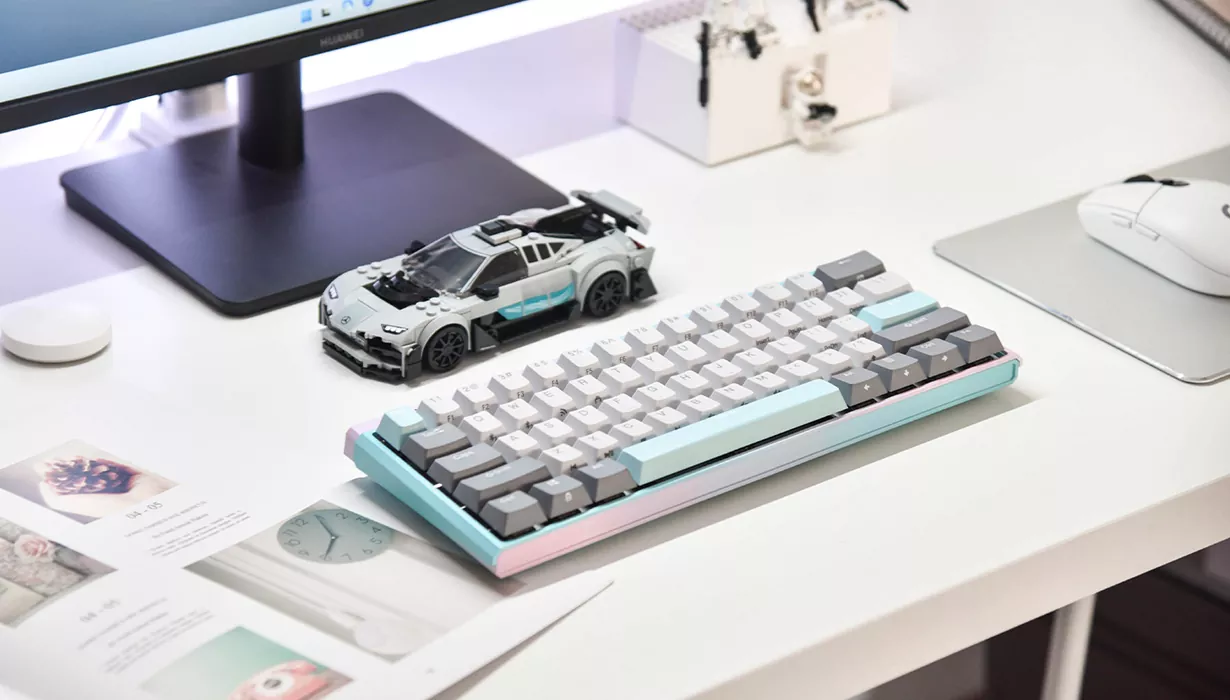
Mechanical keyboards have grown from niche products for gaming enthusiasts into indispensable tools for professionals and typists worldwide. Propelled by global market projections predicting compound annual compound annual compound growth of 11.2% from 2026-2033 with market projections reaching $5.15 billion by 2033, mechanical keyboard manufacturing employs traditional engineering alongside cutting-edge automation for optimal manufacturing quality products that make us happy typists! Step inside an actual factory of these precision devices as we uncover how raw materials become tactile durable keyboards we love.
1. Design & Prototyping: Laying the Foundation of Precision
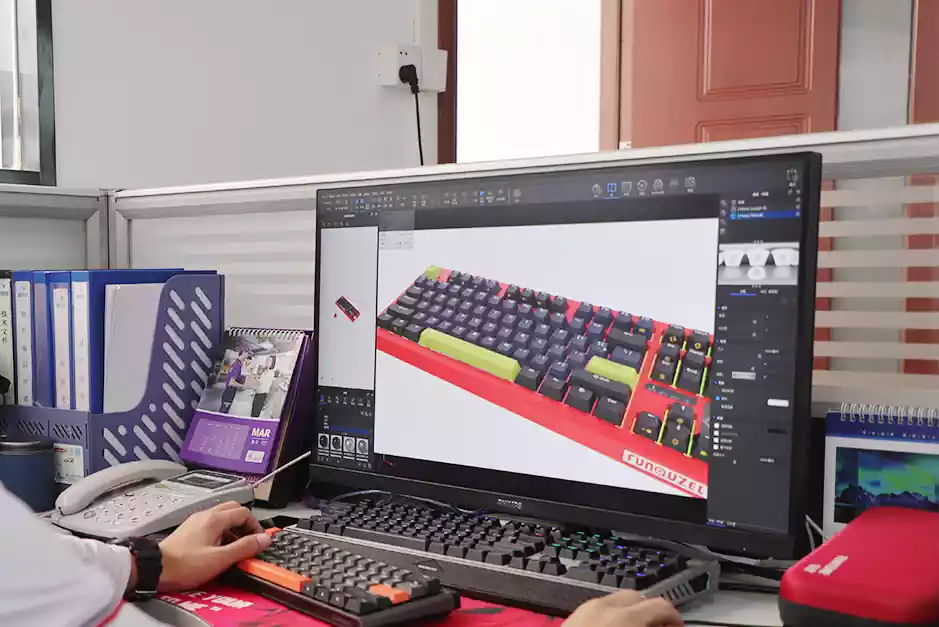
Every mechanical keyboard begins in the design lab, where functionality, ergonomics and aesthetics converge. Engineers use specialized CAD software to craft digital blueprints containing key layouts ranging from 60% compact to full-size 108-key), backlighting integration, programmable key features and compatibility with hot-swappable switches. At this phase of design there are also numerous switch variants-linear, tactile or clicky--that provide unique typing experiences for users.
Once digital designs have been finalized, prototyping brings them to life. Manufacturing plants use 3D printing or CNC machining to fabricate physical prototypes for testing fit, feel and functionality - perfect for high precision components like switch housings where tight tolerances must be maintained by CNC while 3D printing helps speed iterations for custom layouts. Prototypes must undergo user testing and adjustments until mass production. Some factories perform multiple iterations cycles of key travel, switch responsiveness and ergonomic comfort adjustments prior to mass productio
2. Material Selection: The Building Blocks of Durability
Quality mechanical keyboards rely on premium materials selected to address specific performance attributes. Key components and their materials include:
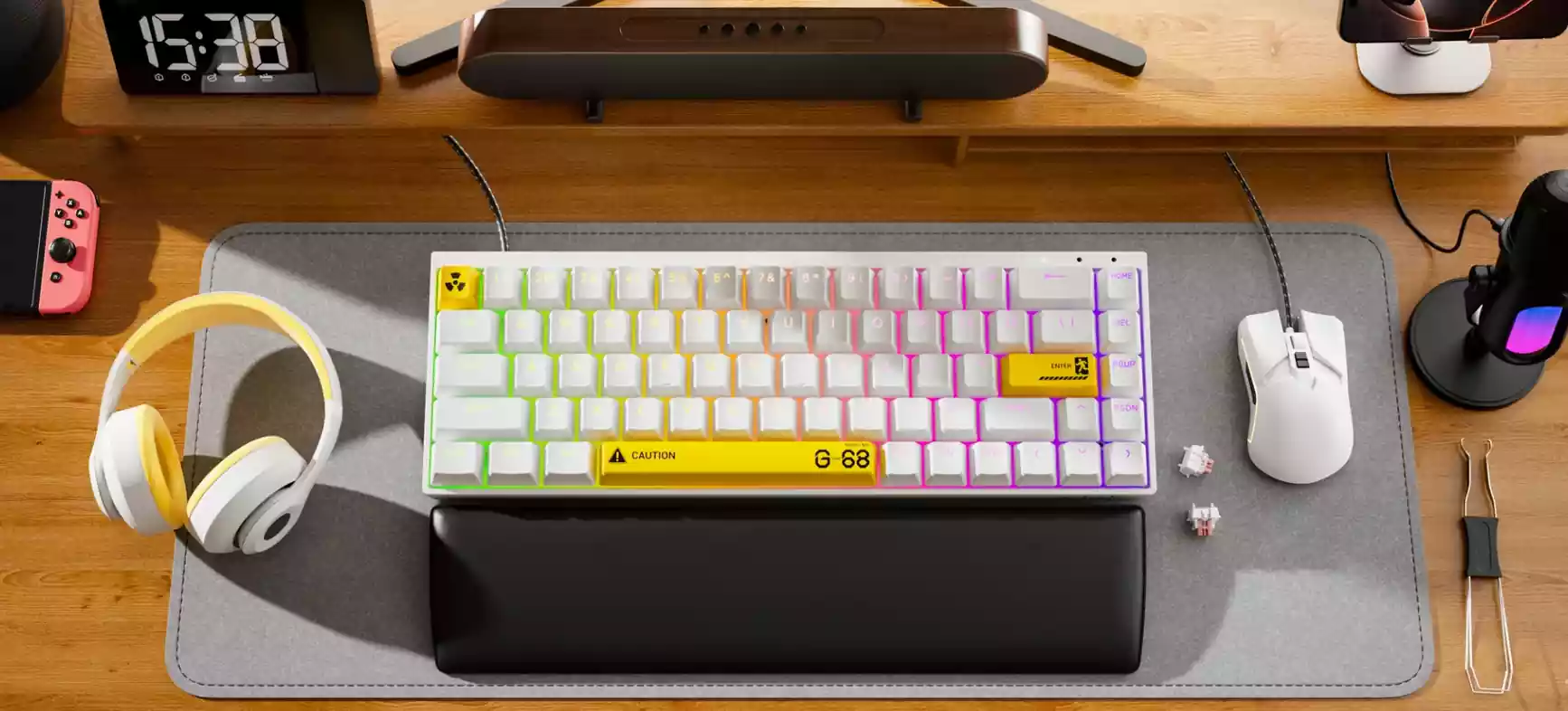
Keycaps are the primary visual element, typically constructed of ABS (acrylonitrile butadiene styrene) or PBT (polybutylene terephthalate). While ABS offers smooth surfaces and lower costs, PBT provides greater durability, resistance to wear, and less likely to fade over time - making it a favorite among enthusiasts. Some factories utilize dye-sublimation or double-shot molding processes to produce fade-resistant keycap legends; advanced facilities even employ five-sided sublimation for intricate designs.
Switches: At the core of every mechanical keyboard is its switch assembly, composed of plastic housings, metal springs and contact points. High-end switches use nylon or polycarbonate housings for consistent tactile feedback while gold-plated contacts add conductivity and longevity - popular brands like Kailh, Gateron and Cherry MX have set industry standards; many factories collaborate to develop custom switches specifically tailored to flagship keyboard models such as their flagship offerings.
- PCB (Printed Circuit Board): The "brain" of the keyboard, composed of fiberglass or epoxy with printed copper traces. PCBs must be engineered precisely to connect each switch to its computer while maintaining thermal resistance for prolonged use. Factory tests PCBs for continuity and signal integrity before assembly.
Casing: Provides structural support and aesthetic appeal with materials ranging from lightweight plastics to premium aluminum or wood casings; anodization provides scratch resistance, while injection molding for plastic casings provides cost-efficiency.
3. Component Manufacturing: Precision at Scale
Manufacturing keyboard components is a mix of automated precision and hand craftsmanship, particularly when it comes to switches - the most complex part of any keyboard.
Switch Production: Automation-Driven Precision
Switch manufacturing begins with Huang Pian Chong Ya (reed stamping), where automated punch presses form metal strips into contact reeds at high speed using automated punch presses. Many factories, like Kailh, use fully automated lines with minimal human intervention beyond inspection and material handling Xun Jian (inspection). After being stamped, coated in gold or silver for conductivity purposes and assembled onto plastic housings and springs.
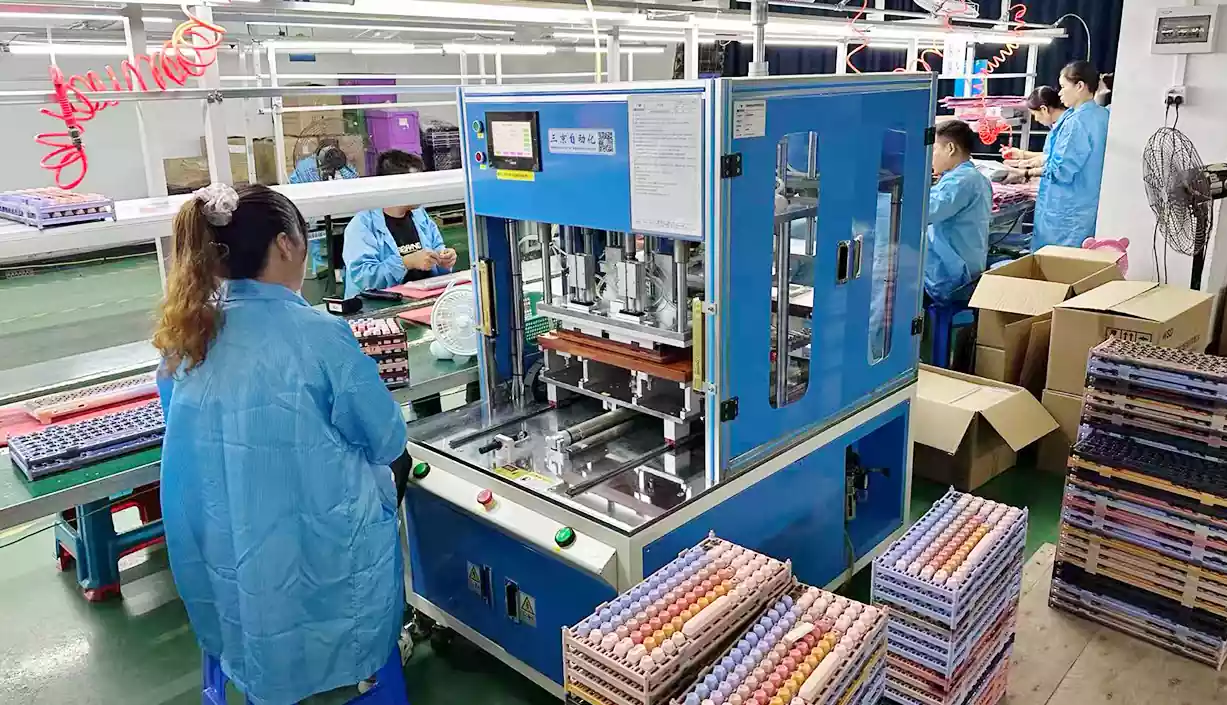
Injection molding machines produce switch housings, keycap bases and casing parts for switch systems. These machines operate 24/7 with robotic arms removing finished components to maintain quality and ensure consistency. For custom switches, factories often swap molds or tweak parameters in order to customize actuation force (the pressure required for keystroke registration) and tactile feedback based on user requests.
Keycap Manufacturing
Keycaps can be produced either via injection molding (ABS) or compression molding (PBT). Double-shot keycaps use two layers of plastic--one for the base and another for the legend--to ensure permanent legibility, while dye-sublimation keycaps use heat transference of ink into plastic, creating vibrant wear-resistant designs. After molding is complete, each keycap must be polished and checked for defects like warping or uneven legends before finally being polished and put back on sale.
4. Assembly: Bringing Components Together
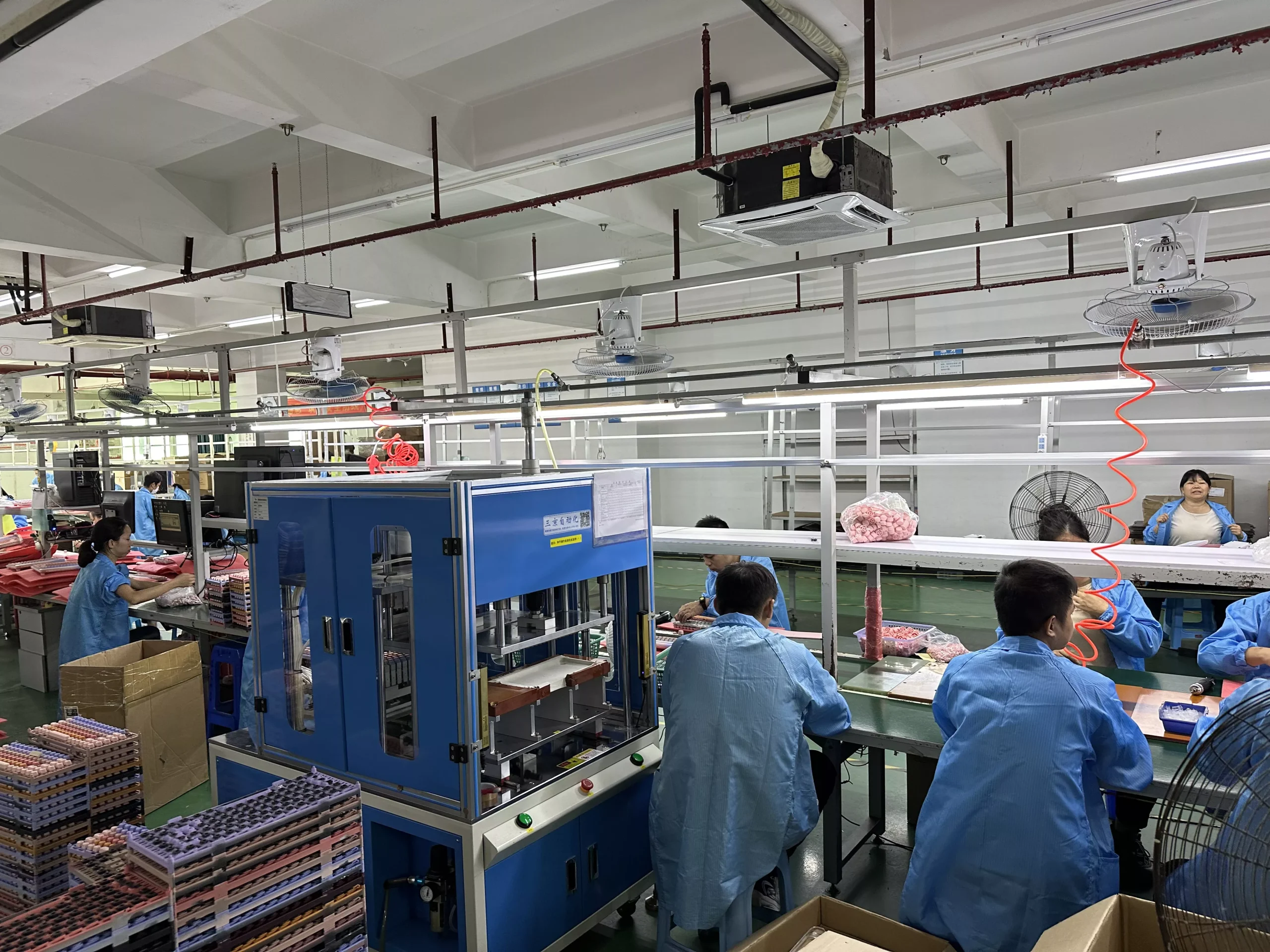
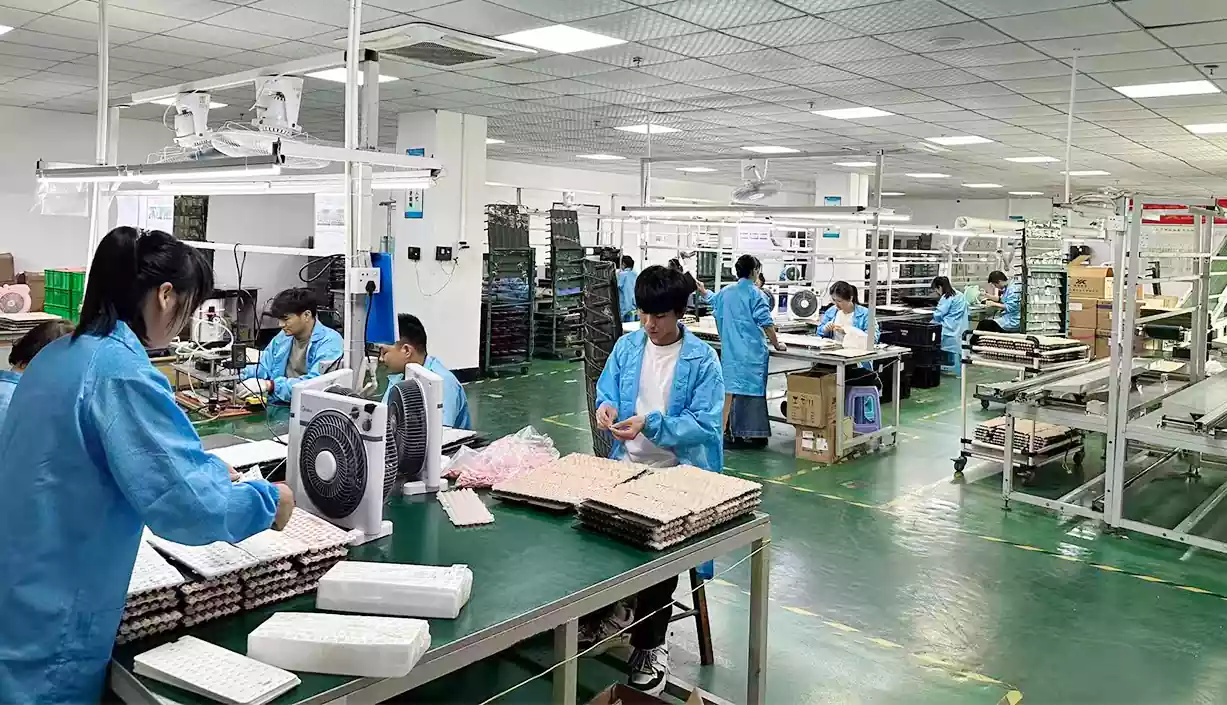
Modern mechanical keyboard factories rely heavily on automated assembly lines to balance speed and precision; some steps still require human supervision, though.
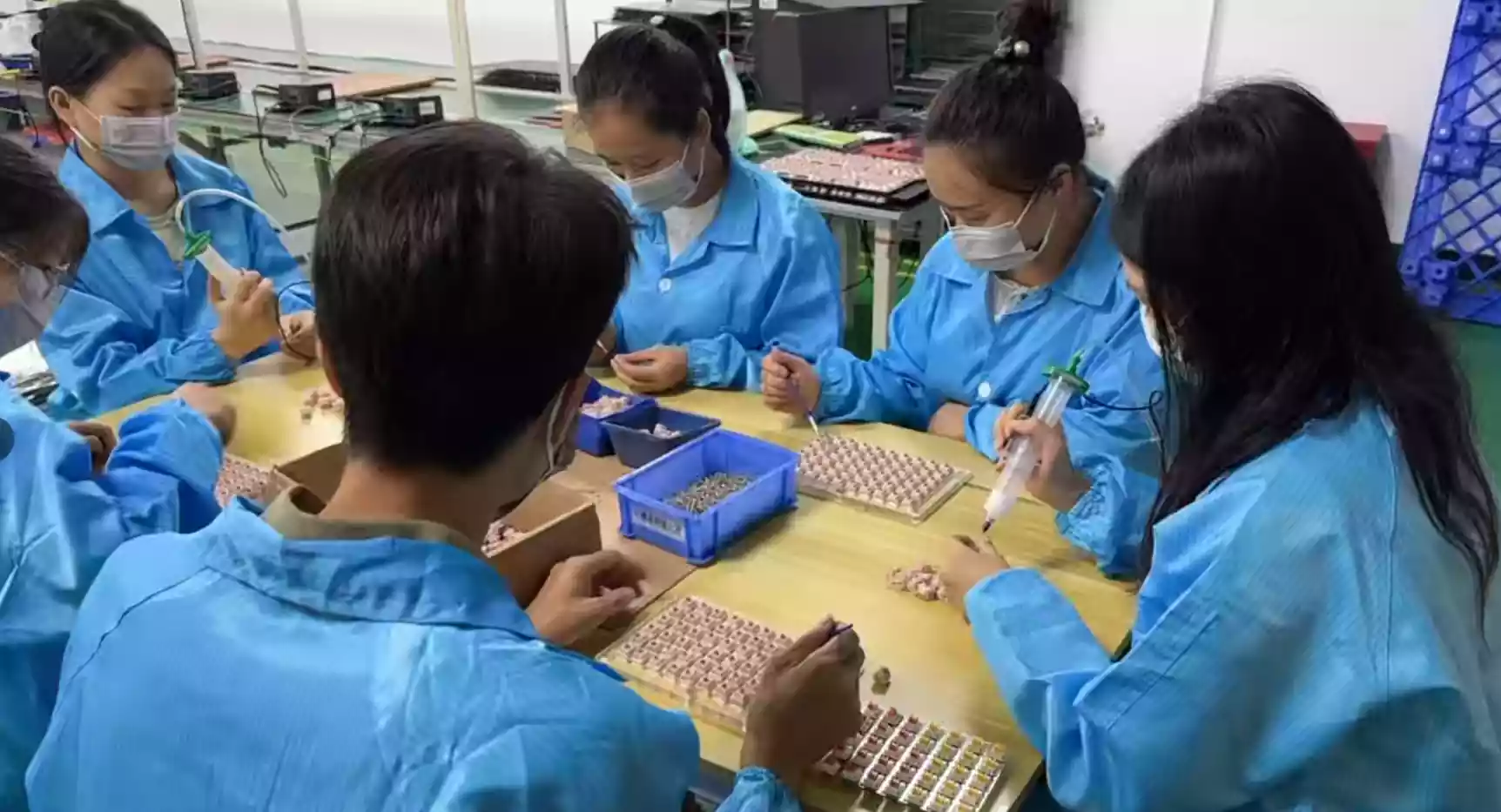
- PCB Prep: Stabilizers--essential for large keys like the spacebar--are installed first on the PCB and lubricated with dielectric grease to reduce noise and ensure smooth actuation. Afterward, keyboard tester software is used to test all connections to confirm they work correctly.
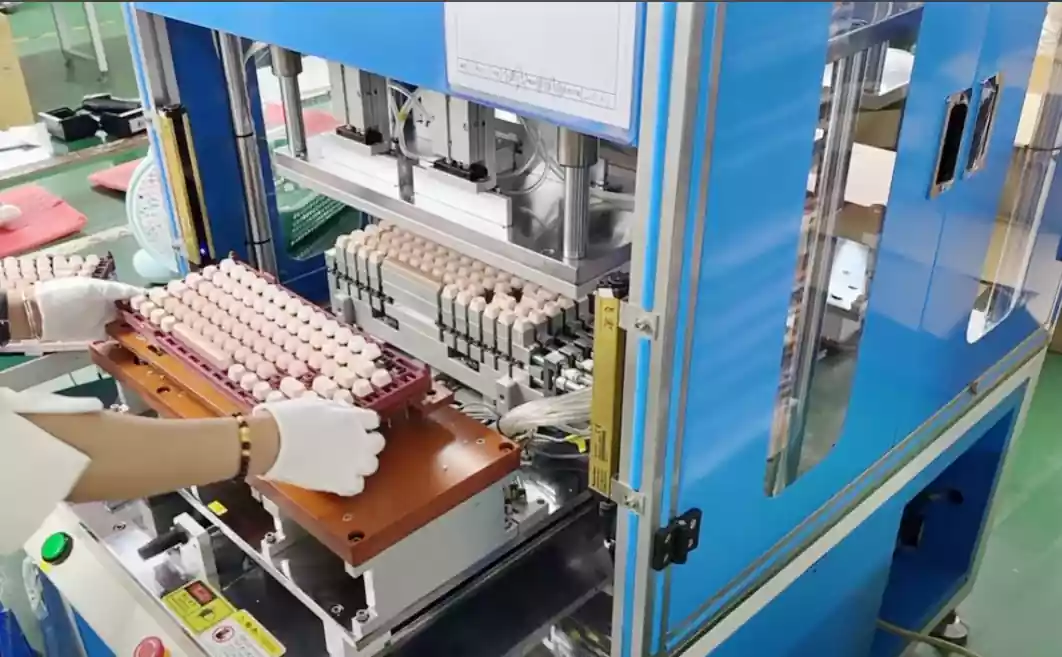
- Switch Installation: Robot-operated robots position switches into their designated slots on a PCB and align pins for soldering. High-volume factories often utilize wave soldering machines for this process, while smaller lines or custom orders may use hand soldering to ensure quality connections. Hot-swappable keyboards, on the other hand, bypass soldering entirely to allow users to switch switches later without the hassle.
- Casing and Keycap Assembly: After mounting the PCB inside its casing with screws or clips, keycaps are secured manually onto switches--either manually for custom designs or automated machines for mass production. Finally, factories check key alignment and wobble, making adjustments as necessary if needed to stabilizers.
Leading factories such as Kailh have shown impressive efficiency. Robots assemble one switch every 0.8 seconds; human workers focus on quality checks to make sure there are no loose components or misalignment issues with keys.
5. Quality Control: Rigorous Testing for Reliability
Mechanical keyboards are built to withstand millions of keystrokes, and therefore quality control (QC) must be adhered to without compromise. Factories typically implement multi-layered testing measures.
- Switch Testing: Each switch undergoes rigorous actuation force and travel testing, with machines verifying consistency across all keys. Life cycle tests simulate 50-100 million keystrokes (representing years of heavy use) at 5 presses per second 24/7 and failed switches are either discarded or repaired as necessary.
Functionality Testing: When completed keyboards arrive, they are connected to computers for testing to assess every key, backlight, and feature; RGB keyboards also undergo color calibration to ensure uniform lighting levels.
Visual & Tactile Inspection: Quality control technicians inspect for cosmetic flaws (scratches, misalignment) while testing typing feel, to make sure there are no sticky switches or uneven key response. Pressure curve testing compares actual data against design specifications to guarantee consistent tactile feedback.
6. Final Packaging & Distribution
Passed keyboards are cleaned, packaged with accessories (USB cables, keycap pullers and user manuals), labeled for distribution and labeled according to sustainable packaging trends. Manufacturers generally opt for recyclable materials while custom or branded keyboard packaging may feature logo printing or personalized inserts to meet eco-friendly trends.
From factory floors to consumers, mechanical keyboards' journey ends with distribution through e-commerce platforms, retail stores and B2B partnerships--fueled by increasing demand from gaming, remote work and creative professions for mechanical keyboards.
Mechanical Keyboard manufacturing will become more competitive over time
Innovation remains at the core of factory floors, with wireless connectivity (Bluetooth 5.0/2.4GHz), low-profile switches and modular designs leading to positive change on factory floors. Factory owners are investing in AI-powered QC systems to detect defects faster and 3D printing for on-demand custom components; as user demand for customization grows, factories are providing customized layouts, switch options and keycap designs in mass production environments - offering mass personalization while simultaneously meeting mass demands at scale.
Behind every satisfying click or smooth keystroke produced by mechanical keyboards lies a factory that prioritizes precision, quality, and innovation. This combination of technology and craftsmanship ensures that mechanical keyboards will remain an invaluable tool for years to come.