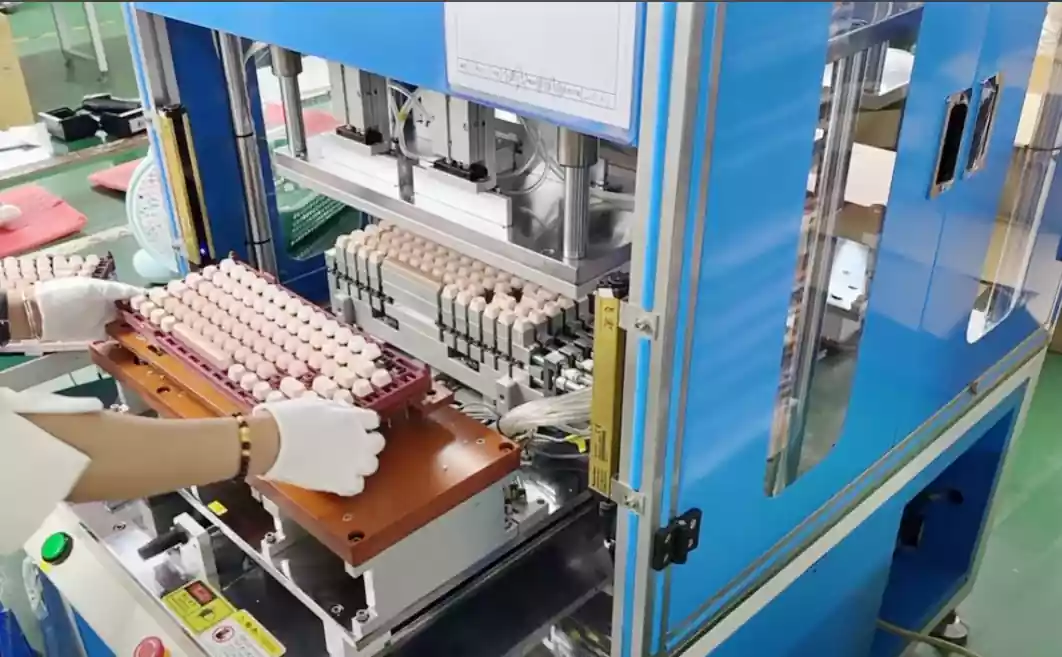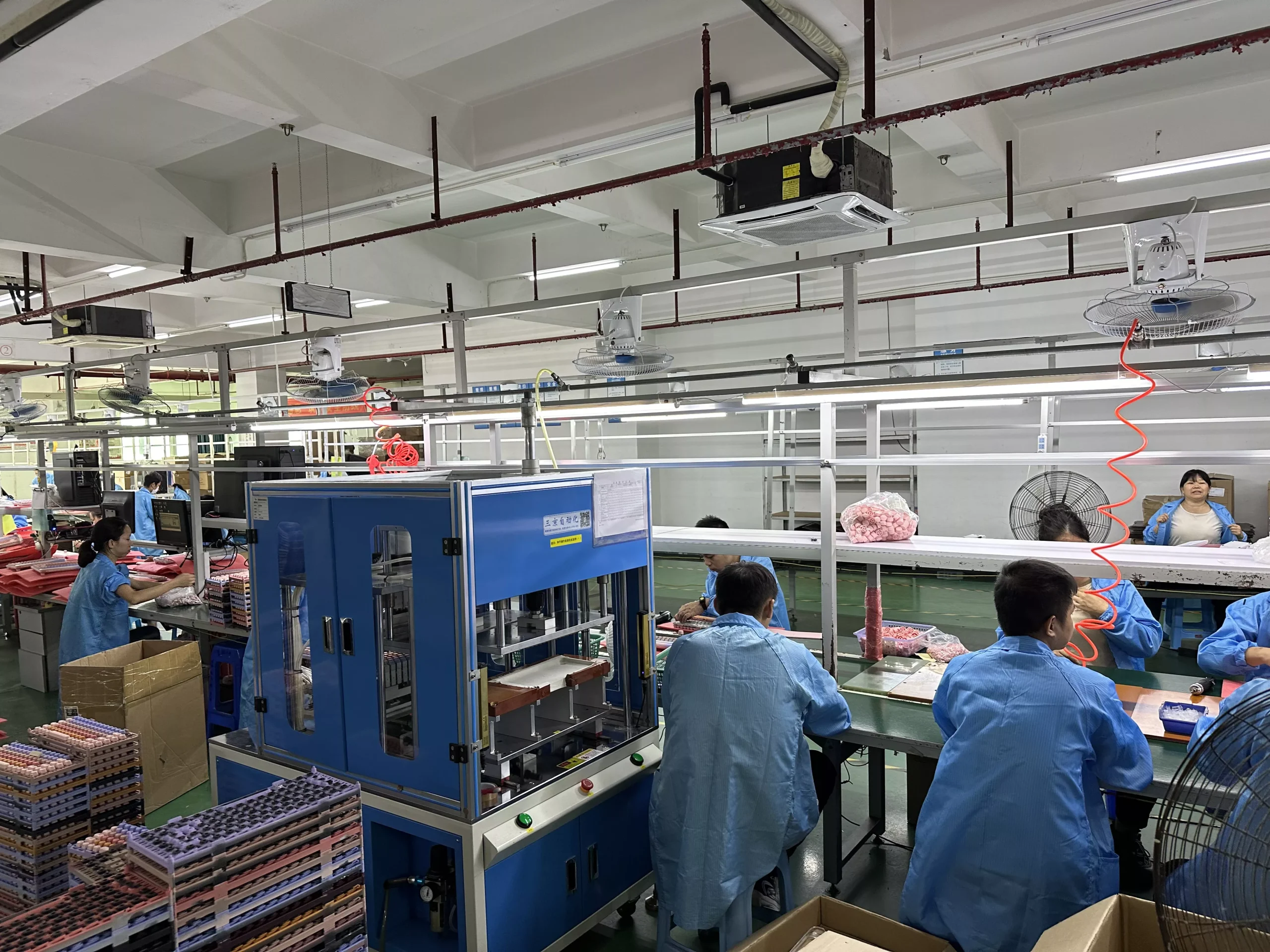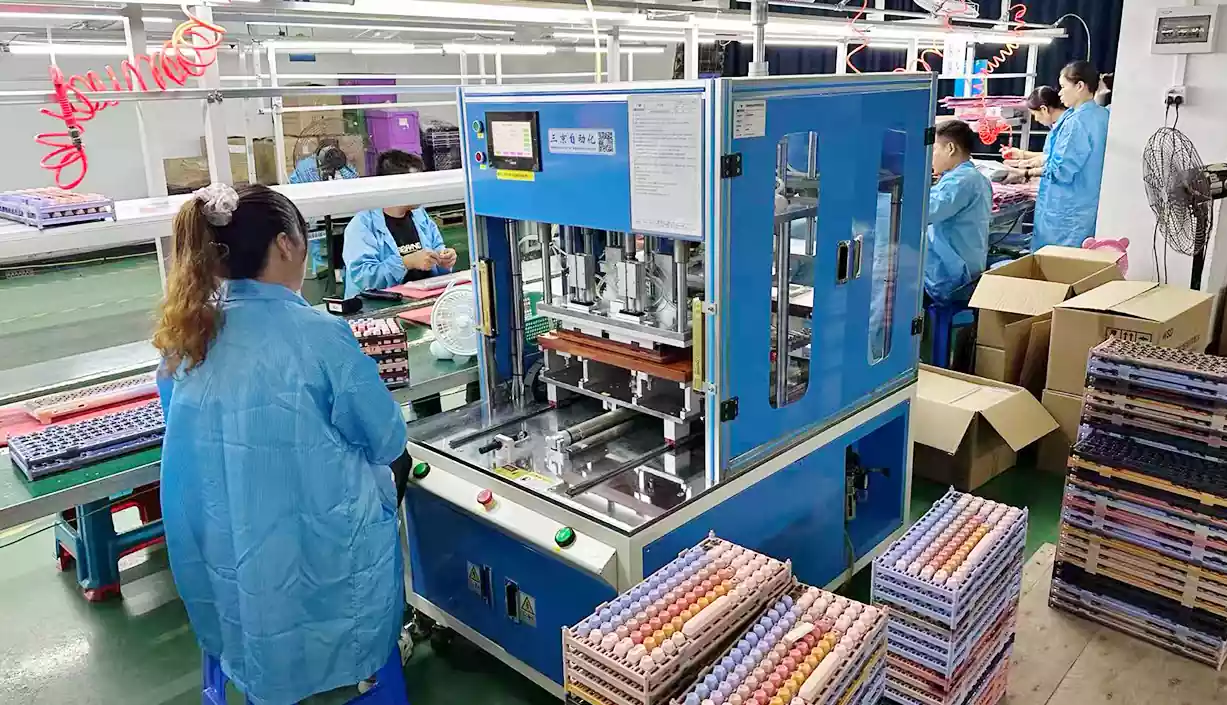
HengCang-Tech In keyboard manufacturing, the keyboard switch pressing machine (also known as the automatic switch inserting machine) is the core equipment in the production of mechanical keyboards. Its main task is to accurately and efficiently install tiny mechanical switches onto the keyboard’s mounting plate.
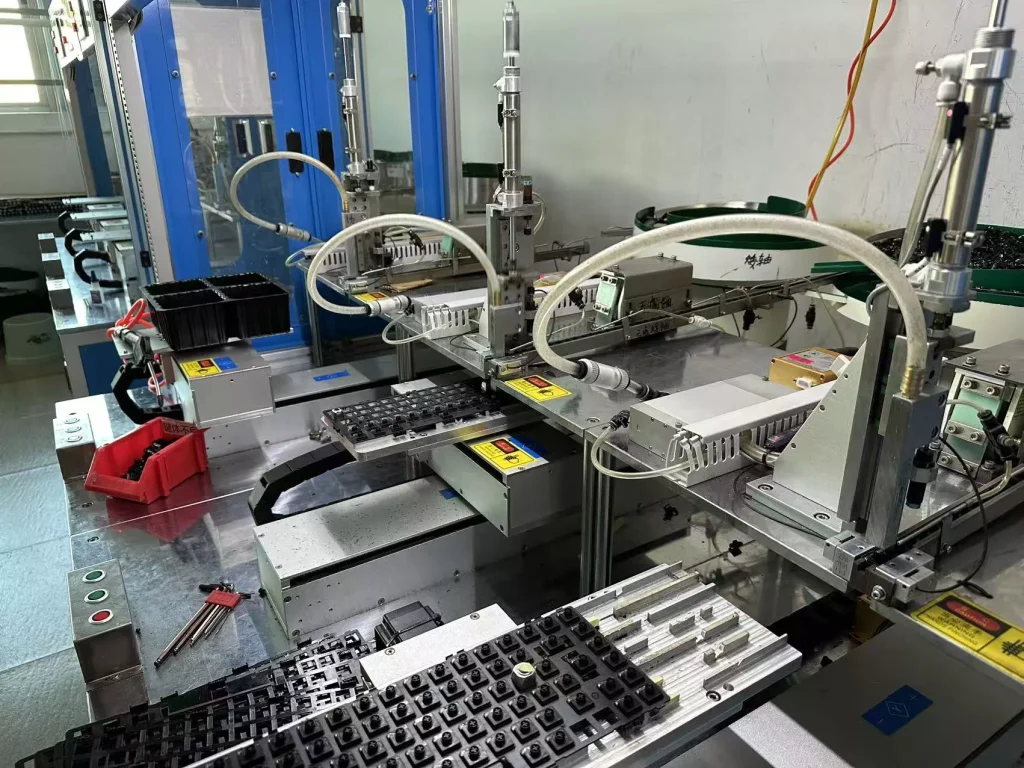
🔧How Core Components Work Together
To ensure the smooth operation of the above process, the keyboard switch pressing machine relies on the precise coordination of several key components:
Switch Feeding Device
It is responsible for "feeding" and usually consists of a vibratory bowl, a linear vibrator, and a temporary storage mechanism. Its working principle is as follows: the vibratory bowl organizes a large number of disorganized mechanical switches through high-frequency vibration and arranges them in an orderly manner on the conveyor track according to a specific direction. Subsequently, the linear vibrator smoothly conveys the arranged mechanical switches to a temporary storage position, waiting to be picked up. This is similar to preparing a neat line of "soldiers" on standby for the machine.

Keyboard Positioning Device
It is responsible for "receiving". The keyboard’s mounting plate is precisely fixed by a mounting fixture and driven by the first linear module (usually a high-precision cross slide table) to be accurately transported to the designated "switch inserting station". This ensures that every hole position requiring switch installation can reach the correct location.
Switch Inserting Actuator
It is responsible for "precision installation" and serves as the core action unit of the entire machine. It generally includes a transfer mechanism (e.g., a multi-axis manipulator) and a switch suction mechanism. The suction mechanism usually adopts a vacuum suction nozzle, which uses negative pressure to safely and non-destructively hold the mechanical switches delivered from the temporary storage mechanism. Subsequently, the transfer mechanism, like a flexible and precise robotic arm, quickly moves the mechanical switch directly above the mounting plate. Finally, through program-controlled vertical movement, the switch is vertically pressed and inserted into the corresponding hole on the mounting plate.
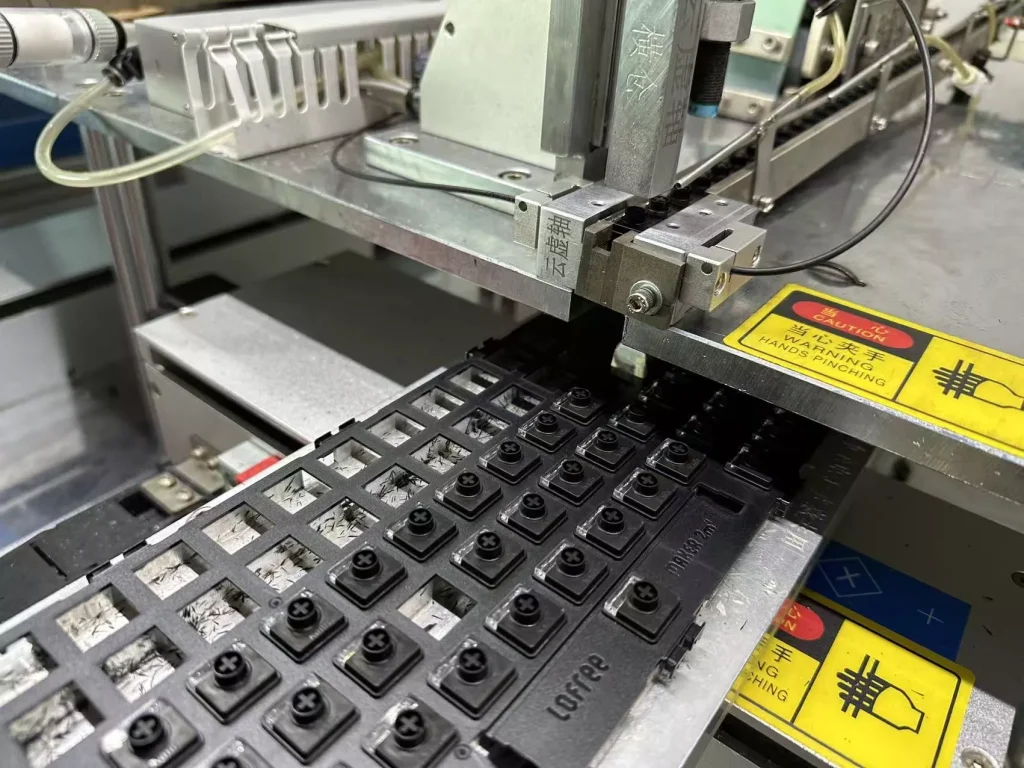
💡 Technical Advantages from the Perspective of Working Principle
After understanding the basic process, you can recognize the significant advantages of HengCang-Tech’s automatic switch pressing machine (also known as the automatic switch inserting machine) over traditional manual methods:
High Efficiency and Consistency
The machine can work 24 hours a day without interruption, inserting hundreds of switches per minute — a speed far exceeding manual operation. Moreover, the insertion force and depth of each switch remain consistent, fundamentally ensuring the uniformity of the keyboard’s tactile feel.
High Precision and Reliability
Equipped with high-precision modules and vision positioning systems, HengCang-Tech’s equipment enables micron-level alignment, ensuring perfect alignment between switches and mounting plate holes. This greatly reduces the risk of damage to switches or mounting plates caused by misalignment or improper force application.
Labor Liberation and Cost Reduction
Mechanical keyboards have a large number of small-sized switches, making manual installation tedious and tiring. HengCang-Tech’s automated equipment not only frees workers from repetitive labor but also significantly reduces production costs in the long run.

🛠️ Extended Understanding: Another Type of "Switch Pressing Machine" — Mechanical Switch Breaking-In Machine
It is important to note that there is another type of equipment also referred to as a "switch pressing machine," but its function is to break in the mechanical switches of fully assembled keyboards. Such machines (e.g., MX-Switch-Break-In-Machine) use a motor-driven cam or connecting rod structure to simulate repeated and uniform pressing of each switch by human hands. The goal is to help the springs and contacts inside the switches quickly go through the "breaking-in period," achieving a smoother and more stable tactile feel. This belongs to a post-production optimization process after keyboard assembly, or a personalized operation performed by some keyboard enthusiasts to enhance their user experience.
We hope these explanations help you fully understand the working principle of keyboard switch-related machines. If you have a deeper curiosity about a specific component or process, we can continue the discussion.