In the procurement list of enterprise office equipment, the keyboard, as a basic tool frequently used by employees daily, its selection directly affects office efficiency, employee experience, and procurement costs. Faced with the mainstream mechanical keyboards and membrane keyboards in the market, procurement personnel often fall into a dilemma between "cost-effectiveness" and "practicality" — should they equip employees with mechanical keyboards that have excellent feel but high cost, or choose membrane keyboards that are economical and easy to maintain? This article will provide a scientific selection plan for enterprise procurement from the dimensions of core differences, scenario adaptation, and procurement pitfalls avoidance.
I. Core Differences: Mechanical vs. Membrane Keyboards – What You Need to Know First
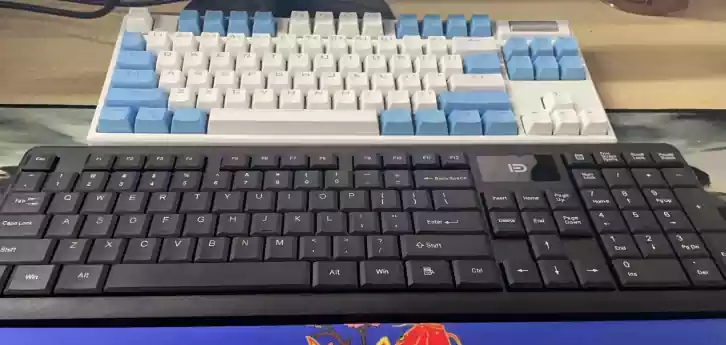
The real difference between mechanical and membrane keyboards comes down to their internal design—frankly, that’s the bottom line. This design gap is why they differ so much in key areas: cost, how long they last, and typing feel. If you’re a corporate buyer, you’ve got to get these differences straight first. Don’t rush into a decision until you’re clear on this—then pick what fits your team’s actual needs.
| Comparison Dimension | Mechanical Keyboard | Membrane Keyboard |
| Initial Procurement Cost | High, the average price of entry-level models is more than 200 yuan, and mid-to-high-end models can reach 400-800 yuan | Low, the mainstream price range is 20-50 yuan, and high-end scissor switch design is about 100-200 yuan |
| Service Life | Long, the single-switch keystroke life is 50 million to 100 million times, and it can be used normally for 10-15 years | Short, the keystroke life is about 5 million times, and it needs to be replaced after 1-2 years of high-frequency use |
| Maintenance Cost | Repairable, a single damaged switch can be replaced with low maintenance cost; however, liquid spillage is easy to damage internal components, and cleaning is difficult | Non-repairable, local damage requires overall replacement; simple structure and easy to clean, with stronger protection against liquid spillage |
| Typing Feel | Clear touch and definite feedback; different switches (red switch, brown switch, blue switch) adapt to different needs, and the fatigue degree is low for long-time typing | Soft feel and vague feedback; ordinary models are prone to soreness after long-time typing; high-end scissor switch design has a more stable feel |
| Noise Level | Large difference; blue switch has obvious noise (easy to disturb others), while red switch and brown switch are relatively quiet | Extremely low noise, no obvious sound when keys are triggered, suitable for quiet office environments |
| Adaptable Scenarios | Positions with high-frequency typing, long-time office work, and requirements for operation experience | General office work, temporary workstations, scenarios with quiet requirements, and bulk procurement with limited budget |
II. Scenario-Based Selection: Adaptation Plans for Different Enterprise Needs
The core of enterprise procurement is "matching on demand" rather than blindly pursuing high-end or low prices. Combined with different office scenarios and job requirements, the selection suggestions are as follows:
1. Scenarios Prioritizing Membrane Keyboards
Quiet Office Environments: Such as open office areas, customer service centers, meeting rooms, etc. The quiet feature of membrane keyboards can avoid the keystroke noise of mechanical keyboards (especially blue switches) interfering with team collaboration and reduce employee complaints. It is recommended to choose membrane keyboards with scissor switch structure, which balance feel and quiet effect, such as Logitech K380 and other models.
Bulk Procurement with Limited Budget: For enterprises with more than 200 employees, if all employees are equipped with mechanical keyboards, the initial investment will be more than 30,000 yuan higher than that of membrane keyboards. If employees have no high requirements for keyboard feel (such as administrative positions and logistics positions), choosing mainstream membrane keyboards of 20-50 yuan can meet basic needs and greatly reduce procurement costs.
Workstations in Special Environments: Such as production workshops, warehousing and logistics positions and other scenarios prone to dust and liquid contamination. Membrane keyboards have a closed structure and stronger protection, and the cost of direct replacement after damage is lower than the maintenance cost of mechanical keyboards.
2. Scenarios Prioritizing Mechanical Keyboards
High-Frequency Typing Positions: Such as copywriting planning, editors, programmers, data entry clerks, etc., where employees type for more than 6 hours a day. The clear feedback of mechanical keyboards can reduce typing fatigue and improve work efficiency, and the long service life feature can reduce long-term replacement costs — although the initial purchase price is high, the average annual use cost is only 10-15 yuan, which is lower than the 10-20 yuan of membrane keyboards.
Enterprises Oriented to Talent Retention: For enterprises that value employee experience such as Internet and technology companies, equipping mechanical keyboards can be one of the benefits to improve employee satisfaction. Research shows that high-quality office equipment can significantly enhance employees' sense of belonging and reduce the turnover rate of core positions. It is recommended to choose mechanical keyboards with red switches or brown switches to balance feel and quiet needs, such as IKBC C210 and other models.
Long-Term Fixed Workstations: Such as management positions, core business positions and other scenarios where the same equipment is used for a long time. The durability of mechanical keyboards can avoid administrative costs caused by frequent replacement, and personalized upgrades can be carried out by replacing keycaps and switches to extend the service cycle.
High-quality supplier docking entrance for enterprise keyboard bulk procurement
3. Mixed Procurement Plan (Recommended)
For most enterprises, the most economical and efficient way is "mixed procurement": differentiated allocation according to job requirements. For example: equip mechanical keyboards for high-frequency typing positions, membrane keyboards for general positions, and portable membrane keyboards for meeting rooms and temporary workstations. A bulk procurement case of a large Internet company shows that this model can reduce the employee complaint rate about keyboards by more than 60% while controlling costs.
III. Procurement Pitfalls Avoidance: 3 Key Notes
Heads up, business buyers – never fall for super cheap keyboards!
Membrane keyboards under ¥20? Total garbage. They’ll have sticky keys, zero satisfying feedback, and frustrate your employees to no end—total productivity killers. And mechanical keyboards under ¥100? Don’t even think about bulk buying them. They’re packed with cheap, no-name switches that die quickly and feel awful when typing. Stick to trusted brands like Logitech, Cherry, or IKBC—they’ll save you so many headaches with solid quality and after-sales help.
Compatibility and comfort are non-negotiable – don’t sleep on these two!
If your team bounces between Windows and MacOS, get keyboards that do both Bluetooth and wired connections. No more annoying compatibility issues that make your IT team want to pull their hair out (and cost you extra money). Also, think about your employees’ wrists! Does the keyboard work with a wrist rest? Is the key travel not too long or too short? Good ergonomics mean fewer work-related aches and happier staff.
Don’t just look at the first price – crunch the long-term numbers!
When you’re deciding what to buy, don’t only care about how much you pay upfront. Mechanical keyboards are pricier at first, but they last 5–10 times longer than membrane ones—and you can fix them if something breaks. Membrane keyboards are cheap, sure, but you’ll be replacing them left and right. Over a few years, those replacement costs add up fast. Here’s a hack: use Annual Average Usage Cost = Initial Price ÷ Service Life to compare—you’ll see which one is the real bargain.
IV. Summary: Core Logic of Enterprise Procurement
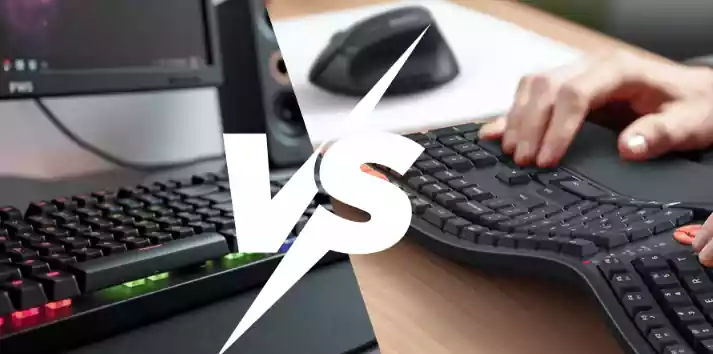
There is no absolute advantage or disadvantage between mechanical keyboards and membrane keyboards. The core of enterprise procurement is "demand-oriented and cost-balanced": membrane keyboards are preferred for scenarios with limited budget, quiet requirements and general office work; mechanical keyboards are preferred for high-frequency typing, emphasis on employee experience and long-term fixed workstations; mixed procurement is the optimal solution that balances efficiency and cost.